

SCIEX Launches Laboratory Optimization Services
What would you say to reducing your total run time by more than half? What if we told you that you could increase lab productivity by around 10-30%, reduce labor time by 30% and make five-figure material savings annually? You’d probably ask us what planet we’re on, but hear us out. With our help, some of our customers have experienced productivity gains just like these. In fact, one of our customers realized cost savings that equaled 4x the cost of the service, which doesn’t even account for productivity and throughput increases.
Unlock Your Lab’s Hidden Productivity
Today’s labs don’t have it easy, and as the world continues to push the limits of analytical science, that doesn’t look set to change. You are probably dealing with mounting numbers of samples, tighter than ever deadlines and the pressure to deliver high-quality data on time. You need your lab running like clockwork to keep up – not only with today’s demand but for what lays ahead.
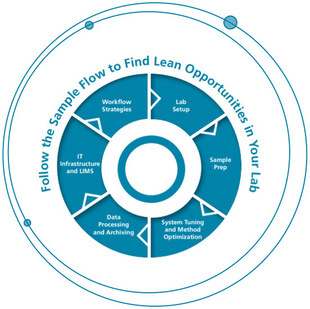
Well the answer may be right in front of you. It’s quite likely that your lab could handle more samples, more complex workflows, and tighter deadlines, and at the same time cut costs, by finding latent capacity and removing unproductive activity.
- Level the workload for more consistency
- Implement standard work instructions for routine workflows
- Identify the training requirements for new employees
- Optimize your existing methods and streamline development of new methods
- Improve data reporting with automated templates and calculations
- Get higher uptime from your instruments with more efficient and regular maintenance
- Empower your employees to use their creativity and experience to improve processing
SCIEX Laboratory Optimization Services
Having helped many customers to improve lab productivity over the years by re-engineering their analytical workflows, we decided to make it official by launching SCIEX Laboratory Optimization Services. Combining the principles of Lean Processing with our extensive knowledge of LC-MS workflows, we help to eliminate waste and raise efficiency by assessing current processes and implementing remedies to deliver the utmost efficiency.
SCIEX runs its business and its labs the same way it helps customers improve their workflows. Each member of our Lab Optimization Services team has over 15 years of experience in analytical labs and working with complex workflows. We can help you unlock the productive potential in your lab by applying the same principles we use in our labs. Applicable to all SCIEX application areas, the whole process can take a little as 4-6 weeks:
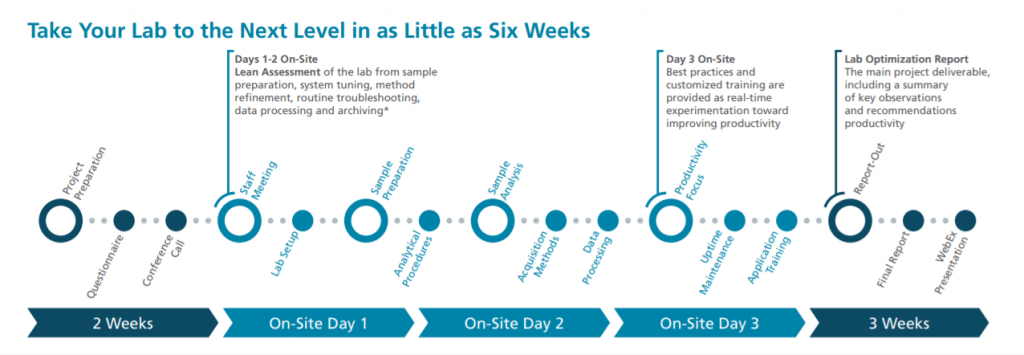
What’s stopping you? Improve your lab’s productivity now, visit sciex.com/lab-optimization for further information.


0 Comments