Customer Experience Day (CX Day) is a special occasion for SCIEX, celebrated every first Tuesday in October. It’s a day dedicated to recognizing the incredible value of our customers and the relentless dedication of our associates who strive to make every interaction meaningful. At SCIEX, our commitment to customer experience is woven into the fabric of everything we do. From providing cutting-edge solutions to offering unwavering support, we aim to build lasting relationships and exceed expectations. Join us as we delve into the insights from our leaders on what customer experience means to SCIEX and how it shapes our journey.
Tags

Celebrating customer experience: Insights from SCIEX leaders
Customer Experience Day (CX Day) is a special occasion for SCIEX, celebrated every first Tuesday in October. It’s a day dedicated to recognizing the incredible value of our customers and the relentless dedication of our associates who strive to make every interaction meaningful. At SCIEX, our commitment to customer experience is woven into the fabric of everything we do. From providing cutting-edge solutions to offering unwavering support, we aim to build lasting relationships and exceed expectations. Join us as we delve into the insights from our leaders on what customer experience means to SCIEX and how it shapes our journey.

Managing ADC characterization: The challenge of turning complexity into confidence
Unlike traditional monoclonal antibodies, ADCs combine an antibody backbone with linker chemistry and a cytotoxic payload. This multi-component architecture introduces overlapping layers of heterogeneity, including drug-to-antibody ratio (DAR) distributions, charge variants, post-translational modifications, and structural changes at both the intact and subunit levels. Across ADC development, these characteristics are considered critical quality attributes that must be characterized, understood, and monitored.

The risky business of aflatoxins in milk
If you’re in the dairy or food testing business, you know the threat aflatoxins pose. Aflatoxins are a type of mycotoxin produced by Aspergillus parasiticus, aspergillus flavus , and rarely aspergillus nomius.1 These are likely the most extensively researched group of mycotoxins because of their adverse health effects.2 What’s more, they are widely found in a variety of crops, namely maize, tree nuts, and spices. Believed to be primarily caused by rising temperatures and humidity, these naturally occurring fungi grow on crops in the field, or during storage of feed and raw materials, where they can potentially produce toxins that enter the food chain.
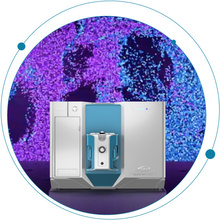
Breaking down the SCIEX 7500 system
Sensitivity and robustness carry different meanings in the world of mass spectrometry. Generally, sensitivity refers to an instrument’s ability to achieve lower limits of detection (LOD). Robustness, on the other hand, refers to an instrument’s ability to consistently...
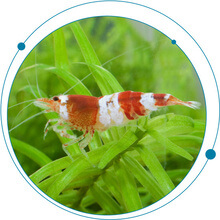
A rising star in food allergen research: proteomics of shellfish allergen
It’s important to know what you’re eating, especially if you suffer from a food allergy.
About 220 million people worldwide live with a food allergy.1 These numbers, along with the complexity and severity of conditions, continue to rise. In America, there are about 32 million food allergy sufferers—5.6 million of those are children under the age of 18.2.2 That’s 1 out of every 13 children, or about 2 in every classroom. From a financial perspective, the cost of food allergy childcare for US families is up to $25 billion
No Results Found
The page you requested could not be found. Try refining your search, or use the navigation above to locate the post.
No Results Found
The page you requested could not be found. Try refining your search, or use the navigation above to locate the post.