

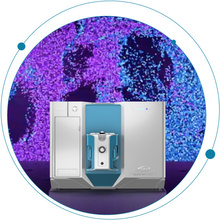
 Sensitivity and robustness carry different meanings in the world of mass spectrometry. Generally, sensitivity refers to an instrument’s ability to achieve lower limits of detection (LOD). Robustness, on the other hand, refers to an instrument’s ability to consistently deliver reproducible results—that is, its ability to generate the same output whether it is run #1 or run #1,000 and beyond.
These were two of the main drivers behind the SCIEX 7500 system, which is packed with new technologies.
In a recent webinar, we show you how it is possible to attain up to 7X greater sensitivity to quantify more trace analytes at lower levels across a broad suite of sample types and workflows using the SCIEX 7500 system. We also share practical application data that demonstrate both the sensitivity and robustness of the system.

We received many questions during the live session and were unable to answer them all at the time, so here we provide some additional answers. We hope you will be inspired to learn more about how you can GO BEYOND your current limitations with the SCIEX 7500 system.
1. How low can the SCIEX 7500 system detect level of drugs in human blood or hair?
In a recent application note, our team presented an optimized and sensitive method for the detection of a panel of 49 drugs in human whole blood. The OptiFlow Pro ion source, DJet ion guide and E Lens technology provided sensitive quantification of all the targeted drugs in the sub ng/mL range, with some down to the pg/mL levels, while maintaining linearity, precision and accuracy of measurement. This exceptional sensitivity was achieved without sacrificing or compromising the data quality, as demonstrated by the precision and accuracy observed at the LLOQ. If you’re interested in reading the full technical note, click here. While we haven’t yet tested the system on hair, based on what we’ve found with human blood, we expect to see better sensitivity with the SCIEX 7500 system.
2. Is it generally much more difficult to optimize a method using a triple quad versus a single quad?
It is not a difficult task, but it does take more time. The major difference is you need to determine the product ion spectra of your analyte compound. On a single quad system, you can set up the system to detect your analyte because the mass of the compound is known. With a triple quad system, the mass of the analyte fragment ions or product ions is not always known ahead of time and needs to be determined. Then there are a couple more system parameters (collision energy is the most important) that need to be optimized with a triple quad. Once that is done, you will have a more sensitive and selective quantification method compared to a single quad.
3. Why were 2,700 injections chosen for the application of the method? Does that mean the SCIEX 7500 system needs maintenance to handle injections beyond this number?
No, the SCIEX 7500 system is not limited to 2,700 injections. That was the number of injections accomplished during the time we had available to use the system.
4. What voltages did you apply to the three quads and how did you make that decision?
The voltage applied to the quad systems is handled by the software. A user only needs to tune or determine the Q1 mass, Q3 mass and collision energy for a sensitive method.
5. Is the cleaning procedure for the QJet ion suide different from the DJet ion guide?
The cleaning procedure for the DJet ion guide is necessarily different from the procedure for the QJet ion guide as they are different parts, and the cleaning and service of the DJet ion guide will be performed by SCIEX service personnel.
You can check out the webinar on demand here. If you have any questions for Ian or Jianru, leave a comment here or send them an email at ian.moore@sciex.com and jianru.stahl-zeng@sciex.com.
Jianru Stahl-Zeng
Global Technical Leader for Food and Environmental Applications, SCIEX


0 Comments