Antibody-drug conjugates (ADCs) are among the most promising—and analytically demanding—modalities in biopharma today. By combining large, heterogeneous antibodies with chemically labile payloads and linkers, ADCs introduce a level of structural complexity that challenges conventional analytical workflows. It also poses the challenge that the very features you need to measure are often the easiest to lose during analysis.
Tags

Why traditional MS/MS falls short for ADCs and how electron-activated dissociation (EAD) changes the equation
Antibody-drug conjugates (ADCs) are among the most promising—and analytically demanding—modalities in biopharma today. By combining large, heterogeneous antibodies with chemically labile payloads and linkers, ADCs introduce a level of structural complexity that challenges conventional analytical workflows. It also poses the challenge that the very features you need to measure are often the easiest to lose during analysis.
ADC analytics FAQs: Answering the most common questions about ADC characterization
Antibody-drug conjugates (ADCs) have emerged as one of the fastest-growing classes of biotherapeutics, combining the targeting specificity of monoclonal antibodies with the potency of cytotoxic payloads. However, this unique architecture also introduces significant analytical complexity. From drug-to-antibody ratio (DAR) distributions and charge variants to conjugation sites and structural modifications, ADCs present multiple, interconnected sources of heterogeneity that must be understood to ensure product quality and performance.
What do scientists really think about EAD for Met ID?
During an LC-MS/MS experiment, traditional fragmentation techniques like collision-induced dissociation (CID) have long been the gold standard. Electron-activated dissociation (EAD) is emerging as a transformative tool that enhances structural elucidation, particularly for complex or labile metabolites.

Detecting low levels of drugs and their metabolites in hair and nail samples using LC-MS/MS
You probably have heard of testing blood and urine samples for the presence of drugs and their metabolites. But do you know about the benefits of hair and nail analysis? In a recent webinar, Tina Binz, Deputy Head of the Center for Forensic Hair Analysis, University of Zurich, discussed the benefits of developing comprehensive and sensitive LC-MS/MS for the detection of low-level drugs and metabolites in keratinized matrices.

LC-MS system replacement: Are you ready?
Meeting deadlines in a bioanalysis laboratory can be a big challenge. Older, less sensitive and less reliable LC-MS systems make it even more difficult. Even the disruption caused by the installation and validation can be disconcerting and delay decisions. Does this sound familiar?

An overview: LC-MS analysis of targeted protein degraders and their metabolites
Targeted protein degraders (TPD) are a relatively new therapeutic modality that opens the potential to target disease-causing proteins. These disease-causing proteins have been highly challenging for traditional small-molecule therapeutics to treat, making TPDs an exciting new therapeutic modality.
Questions and answers to help improve your mycotoxin analysis
During a recent webinar I shared method details for mycotoxin analysis on the SCIEX 7500 system. In this blog i will share the Q&A for the submitted questions that we did not have chance to answer during the live webinar.

A new approach for comprehensive AAV evaluation including full and empty analysis
Certain next-gen vaccines and gene therapy applications rely on the usage of adeno-associated viruses (AAV) as a delivery vehicle. To ensure the safety and efficacy of viral vector drugs, multiple critical quality attributes (CQAs) need to be well characterized.

Guide decisions during cell line development with more information at the intact level
Monitoring product quality attributes (PQAs) throughout monoclonal antibody (mAb) development is vital to ensuring drug safety and efficacy. By adopting orthogonal analytical techniques and integrating new technologies that have the potential to provide more information, it is possible to improve product quality and manufacturing efficiency and make more informed decisions.

Maximize NPS analysis with accurate mass spectrometry
LC-MS/MS is a powerful analytical tool in forensic toxicology testing that can support a variety of testing regimes such as screening, confirmation and quantitative workflows. More specifically, analysis of NPS using LC-MS/MS provides many advantages, including the ability to reliably detect new drugs and their metabolites from a variety of biological matrices.

Unlock the benefits of nominal mass spectrometry for NPS analysis
The development of analytical methods for the detection and quantitation of drugs and metabolites in a range of biological matrices is a challenging process. Forensic toxicology labs need a reproducible and reliable methodology to ensure the robustness of the data and the quality of the results. They also need robust and sensitive instrumentation that can detect drugs at trace levels with high specificity, especially when it comes to novel psychoactive substances (NPS), which can be difficult to monitor and control.

Acoustic Ejection Mass Spectrometry at ASMS 2023
For all those interested in learning about all the cool applications possible with AEMS and the Echo MS system, here is a list of presentations at ASMS 2023. Monday: MOH 3:50pm – Intact protein analysis MP 294 – Metabolite identification MP 312 Compound QC Tuesday TOB...

Clustering algorithms in MarkerView App
Finding interesting and significant changes across a biological dataset can be challenging, so having good algorithms that can mine large datasets for differences, and find the statistically significant changes is really important. Within the MarkerView App we have...

Downloading results from SCIEX Data Store or BaseSpace
Once your data processing sessions have completed, the results files are saved back to either SCIEX Data Store or BaseSpace. These can be downloaded from the cloud to your desktop for additional analysis. Please see these community posts to learn more: Explaining the...
Quickly compare identification results from ProteinPilot software
When a ProteinPilot Software search is complete, a ProteinPilot report is generated that contains all the false discovery rate (FDR) analysis information. More information on using the large and small ProteinPilot reports can be found here When doing method...
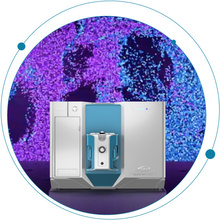
Breaking down the SCIEX 7500 system
Sensitivity and robustness carry different meanings in the world of mass spectrometry. Generally, sensitivity refers to an instrument’s ability to achieve lower limits of detection (LOD). Robustness, on the other hand, refers to an instrument’s ability to consistently...

A rising star in food allergen research: proteomics of shellfish allergen
It’s important to know what you’re eating, especially if you suffer from a food allergy.
About 220 million people worldwide live with a food allergy.1 These numbers, along with the complexity and severity of conditions, continue to rise. In America, there are about 32 million food allergy sufferers—5.6 million of those are children under the age of 18.2.2 That’s 1 out of every 13 children, or about 2 in every classroom. From a financial perspective, the cost of food allergy childcare for US families is up to $25 billion
No Results Found
The page you requested could not be found. Try refining your search, or use the navigation above to locate the post.