Antibody-drug conjugates (ADCs) are among the most promising—and analytically demanding—modalities in biopharma today. By combining large, heterogeneous antibodies with chemically labile payloads and linkers, ADCs introduce a level of structural complexity that challenges conventional analytical workflows. It also poses the challenge that the very features you need to measure are often the easiest to lose during analysis.
Tags

Why traditional MS/MS falls short for ADCs and how electron-activated dissociation (EAD) changes the equation
Antibody-drug conjugates (ADCs) are among the most promising—and analytically demanding—modalities in biopharma today. By combining large, heterogeneous antibodies with chemically labile payloads and linkers, ADCs introduce a level of structural complexity that challenges conventional analytical workflows. It also poses the challenge that the very features you need to measure are often the easiest to lose during analysis.
Managing ADC characterization: The challenge of turning complexity into confidence
Unlike traditional monoclonal antibodies, ADCs combine an antibody backbone with linker chemistry and a cytotoxic payload. This multi-component architecture introduces overlapping layers of heterogeneity, including drug-to-antibody ratio (DAR) distributions, charge variants, post-translational modifications, and structural changes at both the intact and subunit levels. Across ADC development, these characteristics are considered critical quality attributes that must be characterized, understood, and monitored.
ADC analytics FAQs: Answering the most common questions about ADC characterization
Antibody-drug conjugates (ADCs) have emerged as one of the fastest-growing classes of biotherapeutics, combining the targeting specificity of monoclonal antibodies with the potency of cytotoxic payloads. However, this unique architecture also introduces significant analytical complexity. From drug-to-antibody ratio (DAR) distributions and charge variants to conjugation sites and structural modifications, ADCs present multiple, interconnected sources of heterogeneity that must be understood to ensure product quality and performance.
What do scientists really think about EAD for Met ID?
During an LC-MS/MS experiment, traditional fragmentation techniques like collision-induced dissociation (CID) have long been the gold standard. Electron-activated dissociation (EAD) is emerging as a transformative tool that enhances structural elucidation, particularly for complex or labile metabolites.

Your success and voice go a long way!
At the heart of everything we do is ensuring that your workflows and team are empowered to achieve optimal results with your SCIEX instruments, software, consumables, and services. Every interaction with SCIEX is designed to support your success through the dedication...

Pharma perspectives: The influence of LC-MS innovation on drug development outsourcing
It is no secret that (bio)pharmaceutical research and development is complex, both scientific and regulatory processes. Working for a contract research organization and more recently for SCIEX has provided an interesting perspective on trends the market experiences that affect many of us.
Overcoming uncertainty in your PFAS analysis
Just like gum on the bottom of a shoe, the existence of per- and poly-fluorinated alkyl substances (PFAS) in our environment is a sticky one. If you’re in the field of environmental testing, then you’re all too familiar with the threat these substances have on public health. While we have learned a lot about them over the years, there is still much more to understand. With the right detection methods, we can gather the information we need to empower us to make informed decisions on reducing the risks they impose.

LC-MS system replacement: Are you ready?
Meeting deadlines in a bioanalysis laboratory can be a big challenge. Older, less sensitive and less reliable LC-MS systems make it even more difficult. Even the disruption caused by the installation and validation can be disconcerting and delay decisions. Does this sound familiar?

Guide decisions during cell line development with more information at the intact level
Monitoring product quality attributes (PQAs) throughout monoclonal antibody (mAb) development is vital to ensuring drug safety and efficacy. By adopting orthogonal analytical techniques and integrating new technologies that have the potential to provide more information, it is possible to improve product quality and manufacturing efficiency and make more informed decisions.

Metabolite identification and peace of mind
Managing metabolite identification (Met ID) studies is challenging, so what is at the top of your priority list as you plan the year ahead? Ensuring you have the data needed to manage product safety, meeting deadlines, staff recruitment and training, maintaining compliance, capital expenses, or something else?

Does SCIEX provide APIs?
Where I can get the API of the software?
Loss the contact closure signal
our 7600 couple with nanoLC Ultimate 3000 via contact closure. it has run without any loss connection during the batch. Just yesterday, the last injection keep equilibrating system until the LC finished the gradient run. We closed the software and power off LC and MS then started again but it did not help. The Dionex engineer also checked their LC and triggerring cable found both are ok.

Optimized rolling collision energy curves for IDA and SWATH DIA for peptides
During data dependent acquisition (DDA or IDA) or SWATH acquisition, the collision energy can be automatically adjusted according to the mass/charge and charge of the peptide. This dependency has been well characterized on our QTOF systems. By selecting rolling...

What has the Echo® MS system done for the pharma industry? (And don’t just take our word for it!)
SCIEX was very proud to have an illustration of the Acoustic Ejection Mass Spectrometry (AEMS) technology that powers the Echo® MS system on the front cover of the Journal of the American Society for Mass Spectrometry in January 2023. The associated article—Ultrahigh-Throughput Intact Protein Analysis with Acoustic Ejection Mass Spectrometry—was co-authored by scientists from SCIEX and Merck.

Eliminate chick culling with innovative technology
While it sometimes seems questionable whether humanity and modern technology can coexist, technological advances in science can help pave the way to more compassionate business practices.

Current proteomics software compatibility for ZenoTOF 7600 system
Below is a summary of various other software packages that are useful for processing proteomics data from the ZenoTOF 7600 system. Note this list is not comprehensive and only covers the tools we have lightly tested to date. Acquisition Type Software Files needed...

Automation integration for the Echo® MS system
The Echo® MS system is specifically designed to be compatible with a variety of automation options to allow labs the flexibility to personalize their setup to meet their specific needs. To help you make the best decisions for your own lab, here are the answers to some...
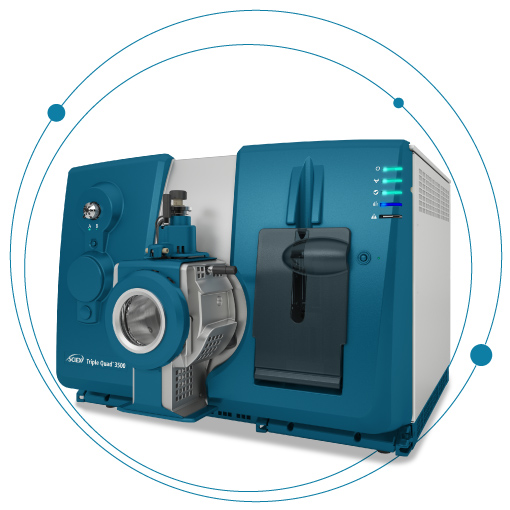
Back to the new basics: Part 1 | Making the leap from GC-MS to LC-MS
Producing accurate results quickly in a demanding environment is no easy feat for analytical scientists. What’s more, many of us are constantly questioning ourselves—I certainly am—about whether we are employing the best technique for the analysis at hand.
It’s an overwhelming thought, considering the wide range of tools that are available to choose from, each of which offers varying levels of capacity, sensitivity, selectivity, specificity and cost. How do you meet the unique needs of your organization without breaking the bank? I get it, and I’m not here to convince you it’s easy. My aim is to guide you through the process to help you make the right decision for you.

Switching between different LCs that communicate through ethernet and setting up the correct module IP address
Different LC options are supported in SCIEX OS software and Analyst software. Those that communicate through ethernet differ in their default IP addresses. In this community post, we will detail the LAN setup, configuring the IP address and subnet mask for LC...
How do I check the quality of the Auto Retention Time Calibration used in my Extractor processing?
When using the Auto-Calibration option in Extractor, a set of retention time calibration peptides will be determined automatically from the library and used for RT calibration. To determine how the fit looks for the calibration on each datafile, follow these steps....
Uploading data for use in OneOmics suite
There are two options for data storage when working with the OneOmics suite. You can store your data either within the SCIEX Cloud platform in the Data Store, or you can store data in BaseSpace (Illumina) and link your BaseSpace account with the SCIEX Cloud platform....

How to download and use SVG files from OneOmics suite
Results workspaces in the OneOmics suite contain a variety of figures, all available for download as SVG (scalable vector graphic) files. To download your figures, select the orange arrow icon located in the upper right-hand corner of each plot. Download will...

How to share your results with collaborators
As multi-omics research is often highly collaborative, tools for rapidly sharing important results files are needed to drive scientific progress. The SCIEX Data Store in the OneOmics suite enables you to not only organize your uploaded multi-omics data files into...
Advanced analytics for mAb variants
Access mab-variants-infokit>
Merging two FASTA files
There is an easy way to merge two FASTA files together. Open notepad and type this string: type %*>"newfile.fasta" Enter any name for the FASTA file between the quotes. Save the file as: Merge FASTA files.bat Copy the two files you want to merge into the same...

High complexity of the lipidome
The complexity of the lipidome is diverse in the structure and there are many combinatorial isoforms that are available within nature. Currently, many different techniques are required to fully characterize a lipid molecule. What if you could do it in a single...
What is the difference between MRM3 vs MS/MS/MS (MS3)?
The MRM3 workflow and the MS3 scan are functionally the same QTRAP system scan, but used with different goals in mind. The main difference is how these scans are used in the whole MS workflow. With MS3 scans, you can use these in a data dependent mode for discovery...
Downloading results from SCIEX Data Store or BaseSpace
Once your data processing sessions have completed, the results files are saved back to either SCIEX Data Store or BaseSpace. These can be downloaded from the cloud to your desktop for additional analysis. Please see these community posts to learn more: Explaining the...
Controlling the M5 MicroLC system with SCIEX OS software using contact closure
Contact closure can be used to control external devices that are not directly controlled by SCIEX OS software. A sample batch is first created in the SCIEX OS software for MS acquisition, and then a similar batch is created on an external LC device with the required...
What are my normalization options in MarkerView software and when should I use them?
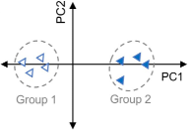
In an LC-MS experiment there are multiple sources of variance that can confound the quality of your results. This variation can be biological e.g. differences between treated and control groups, but can also be non-biological, usually from small variations in...