Explore why capillary electrophoresis remains essential for high resolution, confident analytics across modern biopharma modalities, from proteins to mRNA and gene therapies
Tags

Why capillary electrophoresis still matters in modern biopharma
Explore why capillary electrophoresis remains essential for high resolution, confident analytics across modern biopharma modalities, from proteins to mRNA and gene therapies
Where does capillary electrophoresis fit across drug development?
Capillary electrophoresis (CE) is not confined to a single point in the drug development lifecycle. Its value comes from the ability to deliver high‑resolution, reproducible separations that remain relevant as analytical questions evolve, from early discovery through late‑stage development and lot release.

Getting PFAS right: Why sample preparation matters
Ultra‑low reporting limits, expanding target lists, and the constant risk of background contamination mean that even small missteps before injection can compromise data integrity. PFAS can be introduced at nearly every stage of prep, from sampling containers and PPE to SPE cartridges, filters, solvents, and lab consumables, making contamination control as critical as analyte recovery.
The hidden cost of downtime: What you need to know
In your lab, time is not just a resource. It’s a necessity and every moment counts. Yet, unplanned downtime can disrupt this delicate balance. Even a brief interruption can set your team back in multiple ways.

Bulletproof your clinical laboratory with rugged and reliable LC-MS/MS instrumentation (Clinical diagnostic blog)
The ability to consistently achieve reproducible results on many complex samples across multiple days is critical to a routine clinical laboratory. Laboratories relying on analytical instrumentation require stability and robustness to perform a variety of screening and confirmatory assays with confidence. Liquid chromatography-tandem mass spectrometry (LC-MS/MS) has become the preferred analytical method in the clinical laboratory to reliably perform clinical testing as it provides best-in-class performance and reliability for the most challenging assays. LC-MS/MS offers the required levels of sensitivity and specificity for the detection and quantitation of molecules from complex biological samples, helping laboratories deliver highly accurate data for a variety of clinically relevant analytes across a wide range of assays.
Bulletproof your clinical laboratory with rugged and reliable LC-MS/MS instrumentation (Clinical research blog)
The ability to consistently achieve reproducible results on many complex samples across multiple days is critical to a routine clinical laboratory. Laboratories relying on analytical instrumentation require stability and robustness to perform a variety of screening and confirmatory assays with confidence. Liquid chromatography-tandem mass spectrometry (LC-MS/MS) has become the preferred analytical method in the clinical laboratory to reliably perform clinical testing as it provides best-in-class performance and reliability for the most challenging assays. LC-MS/MS offers the required levels of sensitivity and specificity for the detection and quantitation of molecules from complex biological samples, helping laboratories deliver highly accurate data for a variety of clinically relevant analytes across a wide range of assays.

Harness the power of LC-MS/MS in your clinical laboratory
Liquid chromatography-tandem mass spectrometry (LC-MS/MS) has gained significant attention in the clinical laboratory due to its ability to provide best-in-class sensitivity and specificity for the detection of clinically relevant analytes across a wide range of assays. For clinical laboratories new to LC-MS/MS, integrating this technology into their daily routine operations may seem like a daunting task. Developing a clear outline and defining the requirements needed to implement LC-MS/MS into your daily operations is critical to maximize the productivity and success of your clinical laboratory.

Tips and tricks from our application experts: AAV analysis with CE
Peter Holper, Staff Applications Scientist at SCIEX, US, shares his tips and tricks on AAV analysis using CE with the BioPhase 8800 system and the PA 800 Plus system.
Overcoming uncertainty in your PFAS analysis
Just like gum on the bottom of a shoe, the existence of per- and poly-fluorinated alkyl substances (PFAS) in our environment is a sticky one. If you’re in the field of environmental testing, then you’re all too familiar with the threat these substances have on public health. While we have learned a lot about them over the years, there is still much more to understand. With the right detection methods, we can gather the information we need to empower us to make informed decisions on reducing the risks they impose.

Plasmid manufacturing: Setting up your CGT programs for success
Plasmid DNA serves a variety of purposes, from critical starting material for proteins, mRNA, viral vectors, and drug substances. Below, Dr. Emma Bjorgum, the Vice President of Client Services of the DNA Business Unit at Aldevron and an expert in plasmid manufacturing, provided insights into the process and an outlook on the future.

Detecting low levels of drugs and their metabolites in hair and nail samples using LC-MS/MS
You probably have heard of testing blood and urine samples for the presence of drugs and their metabolites. But do you know about the benefits of hair and nail analysis? In a recent webinar, Tina Binz, Deputy Head of the Center for Forensic Hair Analysis, University of Zurich, discussed the benefits of developing comprehensive and sensitive LC-MS/MS for the detection of low-level drugs and metabolites in keratinized matrices.
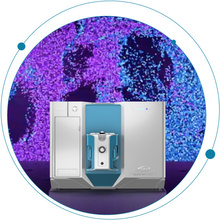
Breaking down the SCIEX 7500 system
Sensitivity and robustness carry different meanings in the world of mass spectrometry. Generally, sensitivity refers to an instrument’s ability to achieve lower limits of detection (LOD). Robustness, on the other hand, refers to an instrument’s ability to consistently...

A rising star in food allergen research: proteomics of shellfish allergen
It’s important to know what you’re eating, especially if you suffer from a food allergy.
About 220 million people worldwide live with a food allergy.1 These numbers, along with the complexity and severity of conditions, continue to rise. In America, there are about 32 million food allergy sufferers—5.6 million of those are children under the age of 18.2.2 That’s 1 out of every 13 children, or about 2 in every classroom. From a financial perspective, the cost of food allergy childcare for US families is up to $25 billion
No Results Found
The page you requested could not be found. Try refining your search, or use the navigation above to locate the post.