Unlike traditional monoclonal antibodies, ADCs combine an antibody backbone with linker chemistry and a cytotoxic payload. This multi-component architecture introduces overlapping layers of heterogeneity, including drug-to-antibody ratio (DAR) distributions, charge variants, post-translational modifications, and structural changes at both the intact and subunit levels. Across ADC development, these characteristics are considered critical quality attributes that must be characterized, understood, and monitored.
Tags

Managing ADC characterization: The challenge of turning complexity into confidence
Unlike traditional monoclonal antibodies, ADCs combine an antibody backbone with linker chemistry and a cytotoxic payload. This multi-component architecture introduces overlapping layers of heterogeneity, including drug-to-antibody ratio (DAR) distributions, charge variants, post-translational modifications, and structural changes at both the intact and subunit levels. Across ADC development, these characteristics are considered critical quality attributes that must be characterized, understood, and monitored.
ADC analytics FAQs: Answering the most common questions about ADC characterization
Antibody-drug conjugates (ADCs) have emerged as one of the fastest-growing classes of biotherapeutics, combining the targeting specificity of monoclonal antibodies with the potency of cytotoxic payloads. However, this unique architecture also introduces significant analytical complexity. From drug-to-antibody ratio (DAR) distributions and charge variants to conjugation sites and structural modifications, ADCs present multiple, interconnected sources of heterogeneity that must be understood to ensure product quality and performance.

Excel macro for calculating averages or percent CVs from replicates in a 384 -well plate
This excel workbook is designed to be used with data copied from a SCIEX OS software Analytics module results file
How to optimize sample plating to run Echo MS system in ‘Fast acquisition mode’
The Echo MS system can acquire data extremely rapidly, at 1 second per sample. To achieve this speed, it should be ensured that there is adequate time between ejections for the analyte signal to return to baseline between ejections. Plating your samples such that you...

Advanced analytics for mAb variants
Access mab-variants-infokit>

Merging two FASTA files
There is an easy way to merge two FASTA files together. Open notepad and type this string: type %*>"newfile.fasta" Enter any name for the FASTA file between the quotes. Save the file as: Merge FASTA files.bat Copy the two files you want to merge into the same...
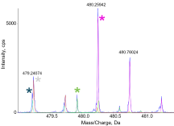
Understanding MS1 Peak Intensity in ProteinPilot software
The “Intensity (Peptide)” values come from LCMSReconstruct, in ProteinPilot software 5.0. It maps the RT, m/z, intensity MS1 surface to find the peak information for the peptide. The Intensity (Peptide) is a weighted sum of the heights of the isotope series at the...
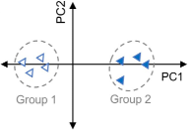
What are my normalization options in MarkerView software and when should I use them?
In an LC-MS experiment there are multiple sources of variance that can confound the quality of your results. This variation can be biological e.g. differences between treated and control groups, but can also be non-biological, usually from small variations in...

What’s in your citrus oil?
Craig Butt explains a non-targeted omics approach to characterizing and profiling compounds in citrus oil Read time: 4 minutes There is increasing interest among consumers in the benefits of natural products containing citrus beyond the traditionally known benefits of...
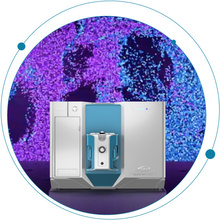
Breaking down the SCIEX 7500 system
Sensitivity and robustness carry different meanings in the world of mass spectrometry. Generally, sensitivity refers to an instrument’s ability to achieve lower limits of detection (LOD). Robustness, on the other hand, refers to an instrument’s ability to consistently...

A rising star in food allergen research: proteomics of shellfish allergen
It’s important to know what you’re eating, especially if you suffer from a food allergy.
About 220 million people worldwide live with a food allergy.1 These numbers, along with the complexity and severity of conditions, continue to rise. In America, there are about 32 million food allergy sufferers—5.6 million of those are children under the age of 18.2.2 That’s 1 out of every 13 children, or about 2 in every classroom. From a financial perspective, the cost of food allergy childcare for US families is up to $25 billion
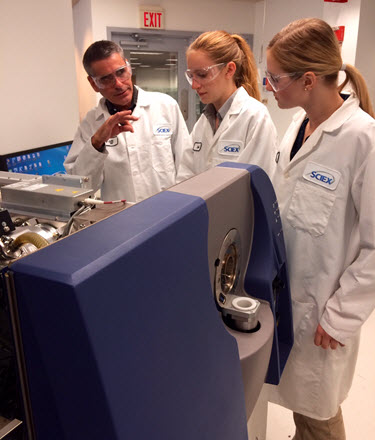
Using Mass Spectrometry for Down Syndrome Metabolomic Research
Last week we launched a really interesting research project with Jeff Miller, Senior SCIEX Scientist, using a SCIEX QTRAP® 6500 mass spectrometer. Our plan was to test whether acetaminophen is metabolized differently in people with Down Syndrome (our younger brother William has Down Syndrome).
No Results Found
The page you requested could not be found. Try refining your search, or use the navigation above to locate the post.