

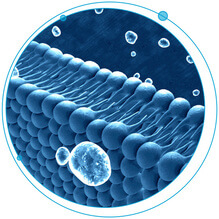
 Analyzing lipids can be tricky. Lipids tend to have a wide variety of chemical structures, and this makes it virtually impossible to find one LC method that can resolve all lipid species. Therefore, multiple LC methods are often used. Also, there is widespread isobaric and isomeric overlap between different lipid classes and species, therefore separating lipid compounds, using an orthogonal separation prior to mass analysis is important.
SelexION® Technology is based on differential mobility spectrometry or DMS. In DMS, ions are separated based on the difference between ion mobility in high and low electric fields in gases at or near atmospheric pressure. DMS can significantly enhance the quality of mass analysis and quantitative accuracy by separating ions of differentiating dipole moments and by reducing chemical noise and ultimately reducing isomeric and isobaric interferences.
In this series of 1-page technical application notes, you’ll see how SelexION Technology simplifies and improves the analysis of lipid molecular species.
In this series of 1-page technical application notes, you’ll see how SelexION Technology simplifies and improves the analysis of lipid molecular species.
In our second technical note, Baljit and Paul team up again with Larry Campbell from R&D to describe the Resolution of Sphingomyelins in Complex Lipid Extracts using SelexION Technology. Here, a bovine heart extract is analyzed using precursor ion analysis. Without the DMS, this experiment generates a spectrum containing both PC (phosphatidylcholine) and SM (sphingomyelins) due to both classes producing a phosphocholine fragment ion with m/z +184. Using the DMS prior to MS analysis generates clean spectra for SM and PC. The two lipid classes are completely resolved from one another, facilitating identification and accurate quantitation.
In our third technical note, Cyrus Papan, Baljit, Paul, and Larry describe the Resolution of Ether- and Diacyl-Linked Phospholipids. Because these lipid species are near isobars, it is necessary to resolve ether-linked and diacyl-linked phospholipid molecular species to adequately characterize their molecular species compositions. Here they show you how, without the need for high-resolution MS or complicated chromatography.
In our fourth technical note, Leo Wang and Paul Baker apply the SelexION Technology for Quantitative Lipid Analysis using MRM. Using reverse-phase chromatography and DMS, lipids are separated using LC by their fatty acid composition, and lipid classes are separated using DMS by a class-specific compensation voltage (CoV). This results in unparalleled selectivity and a reduction in noise, which improves the overall S/N and sensitivity of the targeted lipid assay.
In our last technical note, Paul Baker teams up with Philip Sanders of Eli Lilly to demonstrate SelexION Technology and its use for the Separation of Glycosylceramides (Cerebrosides). Isolating individual glycoforms of cerebrosides, such as Galβ1-1’Cer and Glcβ1-1’Cer, is particularly difficult due to the virtually identical structures of these isobaric lipids, whose only difference being the stereochemistry of the 3’-hydroxyl group. These two cerebroside isoforms produce identical product ion spectra and possess similar physical properties making them very difficult to distinguish by traditional LC-MS analysis. Here they show that these two cerebroside isomers can be easily resolved and quantified using SelexION Technology without requiring extensive sample preparation or chromatography.
To learn more about how SelexION Technology can help with your lipid analysis, view Baljit’s recent overview or search SCIEX.com for additional technical notes, brochures, presentations, and other material.


0 Comments