

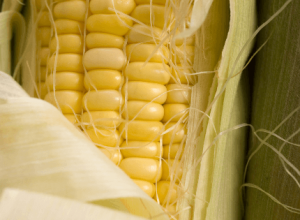
 When we look at emerging food trends for this coming year, you may be surprised to find that the US cornmeal market is making headlines as it is set to grow at a compound annual growth rate (CAGR) of two percent by 20201. This is the type of news that excites us, scientists, as it reminds us why we test for things like mycotoxins in cornmeal and the impact such analysis has on farmers and food manufacturers.
Available for download in the Food Testing Guide, researchers can observe how the API 4000 MS/MS, roQ™ QuEChERS, and Kinetex® XB-C18 Core-Shell Technology columns deliver a rapid and simple approach for Mycotoxin screening from corn products. After processing, cornmeal must be transported and stored on store shelves. However, exposure to warm, damp conditions can cause the growth of mycotoxins, or toxic fungus and can be poisonous upon ingestion. Governments like the EU have agencies that are charged with enforcing exposure limits and as such cornmeal, a fodder crop largely used for animal feed, are prone to random tests like the ones presented here for rapid detection.
As for its history, cornmeal is ground from dried corn (a high yield crop) and is de-germinated meaning the oily germ and bran are removed. It is used to thicken dishes, eaten as polenta, used as a coating for fried onion rings, and has quite a history dating back to 5500 B.C. when the Indians made it a staple. Mixed with water, it was eaten as gruel, used in poultices for healing, and even consumed for stomach problems2.
When found in feed, however, carry-over to animal byproducts can put humans at risk. A National Study for Biotechnology Report indicates mycotoxins pose a significant risk to animal health as they can receive a lower quality of feed sources and ongoing surveillance is needed3. In another report, it is estimated approximately 25% of the world’s fodder crops are polluted with mycotoxins4 where one-third is used for livestock feed, 40% ethanol, and the remainder food and beverage5.
References:
- http://www.businesswire.com/news/home/20161114005537/en/Rise-Demand-Corn-based-Snack-Products-Boost-Cornmeal
- http://www.world-foodhistory.com/2011/02/cornmeal.html
- https://www.ncbi.nlm.nih.gov/pmc/articles/PMC4773798/
- https://www.omicsonline.org/open-access/mycotoxin-strategies-impact-on-global-health-and-wealth-2153-2435-1000498.php?aid=78613
- http://www.nytimes.com/2012/07/31/opinion/corn-for-food-not-fuel.html


0 Comments