

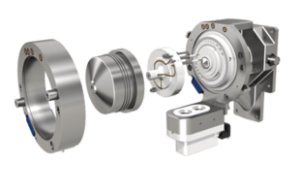
 Scientists and analysts across all fields of testing and research are increasingly challenged by complex samples requiring advanced analytical selectivity. And where LC-MS/MS sensitivity alone is not enough to meet the demands of modern day quantitative performance, Differential Ion Mobility Spectrometry (DMS) has proven to be a valuable addition.
Break Through the Selectivity Barrier of Your LC/MS-MS Separations
SCIEX offers the most innovative solution with its SelexION® DMS Technology. It is a small, planar mobility cell that is easy to install (in less than 2 minutes), easy-to-use and can significantly increase analytical separation power. No other ion mobility separation tool offers the reproducibility, robustness, and simplicity to deliver highly selective and sensitive quantitative and qualitative analyses, within a UHPLC time scale.
How does SelexION make this possible?
The SelexION DMS technology separates ions based on differences in mobility in two different regions of the field dependent mobility curve. Due to its small size, the system can operate with very short ion residence times with optimal performance when using chemical modifiers. The DMS device can also be used in ‘transparent mode’ to allow for maximal workflow flexibility.
- Mobility Separation – Two parallel flat plates define a mobility region, allowing nitrogen carrier gas to create forward directional flow between the ion source and the mass spec analyzer. Analytes are separated based on their respective size, shape, charge state and chemical interaction, before entering the mass spec. Unlike traditional ion mobility, ions are not separated in time as they traverse the cell. Instead, they are separated in trajectory based on the difference in their mobility between the high field and low field portions of the applied RF.
- Modifier Separation – Polar modifiers in the transport region can lead to additional analyte separation and peak capacity. Chemical modifiers, such as isopropanol or acetonitrile, influence ion mobility based on their ability to cluster with analytes.

0 Comments