

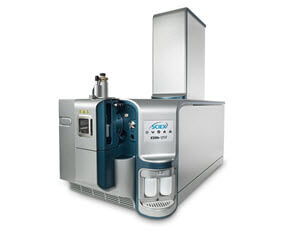
 Working in a forensic lab means technicians want super high-quality data in ultra-fast time. Yet, how do you go about detecting an unlimited number of analytes without re-injecting the sample all while new targeted compounds are being added to the screened panel? In the following application note, “Ultra-Fast Forensic Toxicological Screening and Quantitation in Under 3 Minutes Using SCIEX X500R QTOF System and SCIEX OS 1.0 Software,” researchers set out to achieve a fast method that could detect an unlimited number of analytes with all information afforded mass accuracy, LC retention time, and MS/MS spectral library matching.
Perhaps you have encountered a situation in which an aging sample contains compounds, yet they have degraded and are no longer detectable. Moments like these were front and center on the minds of our researchers as they went about their analysis and knowing that high-speed data processing and straightforward sample preparation are key to a lab’s productivity without the need to reanalyze, they got to work. Using the X500R system with its Time of Flight (TOF) technology, they found that modern QTOF systems provide the capability of switching between MS and MS/MS scans instantly, enabling rapid obtainments of structural information.
Want to know more? Discover how the researchers optimized conditions and extended LC runtime using different columns than previous methods, for better retention of polar species. Source parameters, system settings, chromatograms, and identifying results are all depicted within this application note. However, the biggest take away our researchers want to convey is that SWATH® Acquisition makes it, so all detectable data is captured at once, so there is no need to reanalyze the sample down the line.
For research use only. Not for use in diagnostic procedures.


0 Comments