

 If you work in clinical diagnostics, you can probably confirm that most clinical laboratories have seen a 5 to 6-fold increase in 25-hydroxyvitamin D testing over the past decade, and volume is growing. Furthermore, the Office of Inspector General (OIG) recently reported Vitamin D as one of the top five laboratory assays reimbursed by Medicare, accounting for 8.7 million laboratory tests and $337 million in reimbursement dollars.
We think that’s a pretty significant test volume and test revenue, and wondered if laboratories wanted to run their Vitamin D assays in-house. So, we asked, and you answered! Based on our extensive market research, Vitamin D is the #1 test that laboratories want to bring in-house and reduce send out volumes, thus recovering lost revenue and getting closer to the patient results.
Spurred on by our findings we set forth down the regulatory pathway which included running thousands of tests in clinical trials across different regions and geographies. The result?
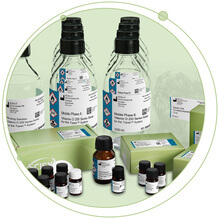
In May this year, we announced the commercial availability of the first FDA–cleared (via the de novo pathway) LC-MS/MS based Vitamin D 200M Assay Kit, exclusively for the SCIEX Topaz™ System. The FDA-reviewed Topaz System is a fully integrated platform with an IVD assay driven by ClearCore™ MD, the new and intuitive software designed specifically for use in clinical labs.
This is just another way we are moving toward our promise of Mass Spectrometry Made Simple and we plan to continue down this path to help more laboratories realize the benefits of Mass Spec.
LC-MS as the Gold Standard for Testing Vitamin D
According to the CDC, LC-MS technology is the gold standard method for testing Vitamin D, offering greater specificity and less cross-reactivity over immunoassay methods.
The CDC has established a Vitamin D Standardization-Certification Program (VDSCP) and the SCIEX Topaz Vitamin D 200M Assay Kit has successfully met the rigorous performance criteria. While individually quantitating D2 and D3 isomers, the Topaz System running the Vitamin D 200M Assay Kit, also automatically differentiates between D3 epimers, providing the specificity to deliver highly accurate diagnostic results in a single analysis.
SCIEX is uniquely poised to deliver this CDC-certified assay to address growing demand within the hospital laboratory market to reduce costs and “send-outs”, particularly with high volume assays like Vitamin D.
The Importance of Vitamin D Testing
According to the CDC, the role of Vitamin D has been well documented (Vitamin D is cited more than 70,000 times in PubMed!) and Vitamin D is an important building block for human health. Thus, it is necessary to provide physicians with accurate results to allow for confident diagnosis of Vitamin D stores and management of Vitamin D deficiency.
Intended Use Statement
The Vitamin D 200M Assay for the Topaz System is intended for in vitro diagnostic use in the quantitative determination of total 25-hydroxyvitamin D (25-OH-D) through the measurement of 25-hydroxyvitamin D3 (25-OH-D3) and 25-hydroxyvitamin D2 (25-OH-D2) in human serum using LC-MS/MS technology by a trained laboratory professional in a clinical laboratory. The Assay is intended for use with the Topaz System. The Vitamin D 200M Assay for the Topaz System is intended to be used in conjunction with other clinical or laboratory data to assist the clinician in making individual patient management decisions in an adult population in the assessment of Vitamin D sufficiency.More Information >
For in vitro Diagnostic Use. Vitamin D 200M Assay kit available in the USA only.


0 Comments