

 If you are working with complex assays that demand exceptionally selective quantitative and qualitative performance, sometimes even the most powerful LC-MS/MS technology can’t always cut it alone.
Perhaps you are struggling to separate isobaric species, isolate challenging co-eluting analytes or reduce high background noise? Regardless of your challenge, the outcome is the same. You probably aren’t getting the levels of quantitation or characterization you need, so method development has become cumbersome, and workflow performance is suffering.
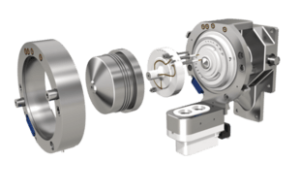
Now you can bring a new dimension of selectivity to your LC-MS/MS analysis on select SCIEX Triple Quad™, QTRAP® and TripleTOF® Systems with SelexION® Differential Mobility Separation (DMS) Technology. The SelexION DMS cell:
- Small, easily interchangeable device that can be installed without tools in less than 2 minutes
- Increase peak separation power, with added enhancements from the use of chemical modifiers
- Meet analytical standards for quantitative reproducibility and robustness
- Match cycle and run times with multi-component analysis and UHPLC timescales
- On-demand operation can be turned off and on as needed without removing hardware
Harness the power of differential mobility separations to simplify your sample preparations, while achieving unprecedented levels of selectivity. Find out more by downloading the SelexION brochure.
How does it work?
Gas phase differential mobility separation within the SelexION device planar mobility cell is based on the ion’s size and shape, and the difference between their unique differential mobilities across high and low energy fields. Gas phase separation occurs prior to entering the mass analyzer where the compounds are then further separated by m/z ratios.


0 Comments