

 Why Dried Blood Spot Analysis Is the Way to Go for Novel Psychoactive Substances
(And Why You Need This SCIEX LC-MS/MS Method)
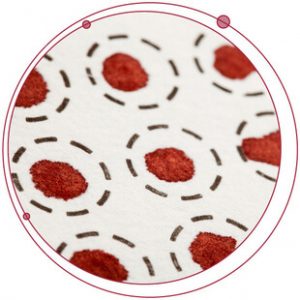
Anyone with children will remember that moment in the hospital when the nurse pricks the heel of your tiny new baby to squeeze out a few drops of blood onto a card. It’s an anxious moment but it’s over in a flash, and necessary to screen for rare but serious health conditions. This dried blood spot sampling technique was first introduced 55 years ago, and it has become the method of choice for newborn screening around the world.
But what does this have to do with forensic testing of novel psychoactive substances, after all, it is quite a leap to talk about newborn babies and then onto designer drugs? While dried blood spot sampling and analysis had to overcome hurdles in the early days, particularly due to low analytical throughput, there is a very good reason for its increasing attention in recent years in other applications.
It offers a faster, simpler alternative to serum/plasma or whole blood analysis in drug monitoring for toxicological analysis. In the tech note LC-MS/MS Screening of 64 New Psychoactive Substances Using Dried Blood Spots (as an Alternative to Whole Blood) we demonstrate the advantages, and here’s a rundown:
- The benefit of collecting a small sample volume: Only a few drops of capillary blood needs to be sampled on filter paper and can be collected with low invasive techniques, such as from the fingertip, compared to blood sampling via venipuncture.
- Easier, cost-efficient storage and transporting: After drying the paper for around 3 hours at room temperature, it can be stored in a specimen bag until preparation and analysis, and can be easily transported by standard mail, not requiring temperature regulation.
- Short- and long-term metabolite stability: Analytes of interest in this work are stable in dried blood spots for at least a week when cooled and even longer if frozen. Prepared samples are stable for at least 3 days.
- Significantly simplified and faster sample preparation: Sample preparation is very fast, easy, efficient and non-selective, which allows the expansion of this method as the number of designer drugs is constantly increasing.
- Supports government action on new drugs: The method can be expanded upon to control the advent of new substances, such as the European Monitoring System for Drugs and Addiction (EMCDDA) Early Warning Program notification of new substances.
Sounds good, so what’s the catch? The small sample volume also means that the concentration of the target analyte is potentially quite low (e.g., less than 1 ng/L), requiring a highly sensitive and selective analysis method for detection and quantification. But in theory, there isn’t a catch if there is a solution, mass spectrometry. It is now the most common technique reported in literature for dried blood spot analysis and Liquid Chromatography-Tandem Mass Spectrometry (LC-MS/MS) sets the benchmark.
In our method, researchers use the highly sensitive QTRAP® LC-MS/MS in Multiple Reaction Monitoring (MRM) mode using the Scheduled MRM™ Algorithm. The method is applied to authentic samples, and results are compared to a validated whole blood method used for routine analysis of NPS, yielding similar results. LOD was between 1 and 10 ng/ml, no interference from matrix compounds was observed, and the method was proven to be specific and selective for the analytes.
Fill out the form on your right to download the 2018 Forensics Compendium to see this method in its full glory, along with recent advancements developed by the forensics team and a view on where LC-MS/MS technology could take forensics in the future.


0 Comments