Read time: 15 minutes The completion of the human genome project in 2003 opened the door to unprecedented insight into the human body through its DNA code. We now know that our genome encodes our proteins, that our proteins are the molecular machinery of certain...
Author Highlights
SCIEX Community
A new generation of therapeutic modalities
There are over 7,000 genetic diseases that could potentially be cured using gene therapy. Rare metabolic diseases, autoimmune disorders, cardiovascular disease and cancers are some of the top disease classes that can be addressed with gene therapies. With over 1,000...
Enhancing Biologics with CESI-MS Characterization
Comprehensive characterization of a biologic requires analysis at both the intact and digest levels, but these analyses can be complex and cumbersome. For example, with conventional liquid chromatography separations, researchers are often left with limited information...
Full, partial and empty capsid ratios for AAV analysis: What’s the big deal?
For many of you working to develop gene therapy drugs, you know that the time to market the drug is critical. Because gene therapeutics cure diseases by targeting specific genes, it is a constant race to see who develops the drug first. Unlike other classes of drugs...
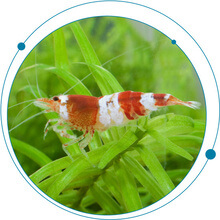
A rising star in food allergen research: proteomics of shellfish allergen
It’s important to know what you’re eating, especially if you suffer from a food allergy. About 220 million people worldwide live with a food allergy.1 These numbers, along with the complexity and severity of conditions, continue to rise. In America, there are about 32...
Microflow for metabolite ID: a win all around
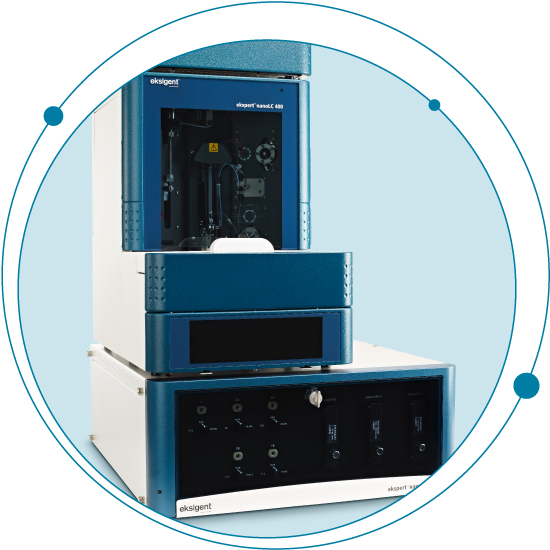
Over the last several years there has been a slow and steady progression within the LC-MS community to move traditional high-flow applications to lower flow rates. In particular, moving into the microflow regime has proven to be a simple adjustment in methodology that...
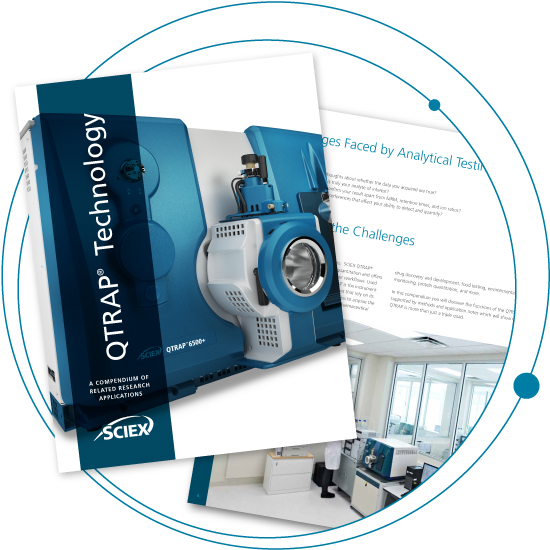
When is a triple quadrupole not a triple quadrupole?
Answer: When it’s a QTRAP® In today’s modern and frenzied analytical laboratories, triple quadrupole mass spectrometers (MS) are the ‘workhorse,’ frontline instrument for carrying out quantitative assays from drug discovery to food safety. To get the best selectivity...
Turbo charging your LC-MS/MS analysis
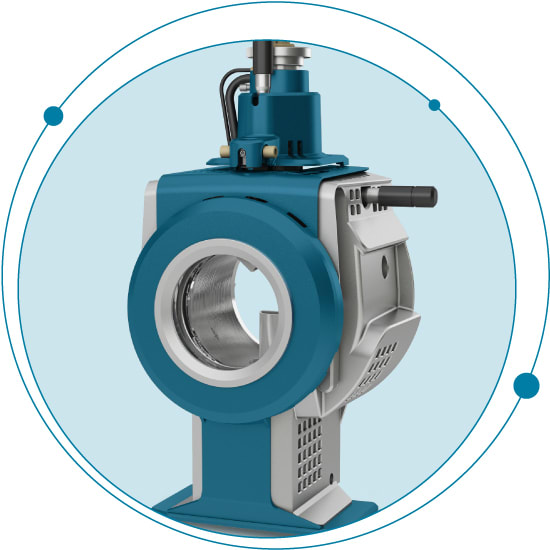
Would you like to take your LC-MS/MS analysis from 0 to 3 mL/min without the complexity of changing probes or splitting the LC flow? Then take a look into the Turbo V ion source from SCIEX. Introduced more than 15 years ago, the Turbo V ion source continues to be a...
Boar taint isn’t so simple
The title says it all. Boar taint is a complex subject. For some, it’s not an issue. Others argue that it’s one of the biggest challenges to pork quality. It’s a very subjective response. In her blog, Dr. Laura Hancox illustrates the striking difference between the...
Worth the Journey – From Immunoassay to LC-MS/MS Adoption
The journey to mass spectrometry (LC-MS/MS) adoption from immunoassay can be complicated, but certainly rewarding. While immunoassay has been considered the default methodology for decades, they can be susceptible to interferences and cross-reactivity, especially for...
Calling SCIEX Software Users: Windows 10 Support for all SCIEX Software
As a researcher in a busy lab, the software driving your work is critical to your success, and the timely transition of SCIEX applications to Windows 10 is no exception. In early 2020 Microsoft will be ending Windows 7 support, and we want you to know we are taking...
Improving precision
Factors that affect the reproducibility of your assay As scientists, we know our experiments must be reproducible. Without it, there is always doubt as to whether our data interpretations and conclusions are truly sound. With LC-MS/MS quantitative methods, high...