

 The journey to mass spectrometry (LC-MS/MS) adoption from immunoassay can be complicated, but certainly rewarding. While immunoassay has been considered the default methodology for decades, they can be susceptible to interferences and cross-reactivity, especially for biological compounds that exhibit similar chemical structures. Moreover, comparisons between manufacturers can give rise to differences in results when testing for the same analyte due to variations in antibody production, causing unwanted bias during evaluation of an assay.
An increasing number of clinical laboratories around the world have begun to consider and begin the journey of developing their own methodology based on mass spectrometry. There are a number of advantages with the LC-MS/MS approach: high-performance separation, identification, and quantification of small molecules, peptides, and proteins routinely tested in a biochemistry laboratory. The ability to quickly adapt to new and emerging trends in laboratory testing, as well as the freedom to troubleshoot their own methods are a huge advantage.
Besides excellent reproducibility and specificity, LC-MS/MS has the capacity for multiplexing, high-throughput, and provides significant cost savings as users implement their own Lab Developed Tests. These features are some of the reasons for the increasing popularity of mass spectrometry adoption, even in the face of the need for specialized and specifically-trained technicians and its own set of analytical challenges.
Mass spectrometry is becoming the gold standard for quantification. The cost savings for LC-MS/MS alone may not be enough, but when coupled with the three “Ss”: Speed, Sensitivity, and Selectivity, the potentials become much clearer. The journey has helped improve the practice of medicine and enabled physicians to provide better patient care and even allowed for the development of precision diagnostics.
With the ever-present challenges associated with laboratory test reimbursement, mass spectrometry can provide a solution that saves money and provides multiple benefits to the patient and the healthcare system.
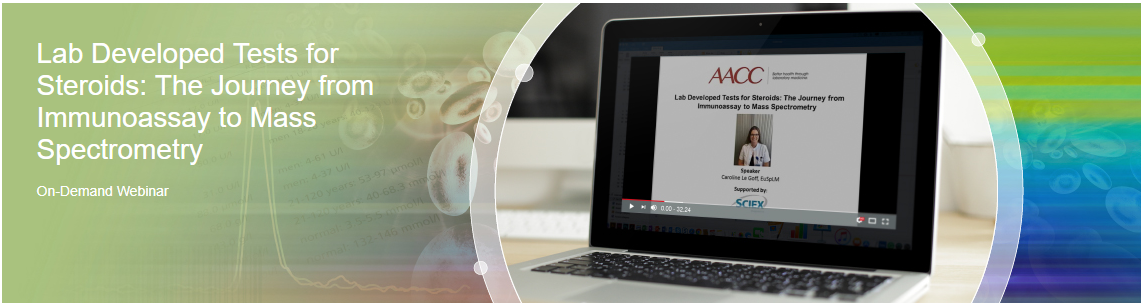
Dr. Caroline Le Goff, a Clinical Biochemist from the University of Liège recently participated in a webinar with us, detailing her experience in the journey from immunoassay to mass spectrometry adoption.
Come and discover her experiences throughout the journey.
Lab Developed Tests for the clinical laboratory >


0 Comments