
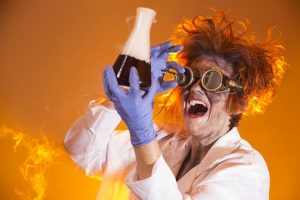
The Top Ten Things Scientists Think about on Halloween

Oct 28, 2015 | Blogs, Food / Beverage | 0 comments

  1. Should I be a mad scientist or something else for Halloween?
  2. Wouldn’t it be fun to bring these candy bars back to the lab tomorrow and test them for contaminants?
  3. I hope we have enough beakers for the Halloween punch.
  4. Who needs Minecraft when you can be a Mass Spectrometer for Halloween?
  5. I better not have to run these samples again – trick or treating starts in an hour.
  6. How about we melt all our candy together and see what happens?
  7. How can we make the lab look really scary?
  8. Is there a method to the madness?
  9. After I’m done carving this pumpkin, I want to see if it is covered in pesticides.
  10. Halloween? I have to work

3 reasons ZT Scan DIA is changing the game in metabolomics

For years, metabolomics researchers have faced a frustrating reality: modern high-resolution mass spectrometers can detect tens of thousands of molecular features, yet only a fraction can be confidently identified. The challenge is no longer finding molecules. It is generating the high-quality MS/MS data needed to confidently assign structures and extract meaningful biological insights.

ADC analytics FAQs: Answering the most common questions about ADC characterization

Antibody-drug conjugates (ADCs) have emerged as one of the fastest-growing classes of biotherapeutics, combining the targeting specificity of monoclonal antibodies with the potency of cytotoxic payloads. However, this unique architecture also introduces significant analytical complexity. From drug-to-antibody ratio (DAR) distributions and charge variants to conjugation sites and structural modifications, ADCs present multiple, interconnected sources of heterogeneity that must be understood to ensure product quality and performance.

Sterile but toxic: Cereulide detection in food matrices

In a recent webinar, Ming Gao, Ph.D., Senior Research Chemist at Mérieux NutriSciences, explored the growing challenge of cereulide contamination in food products and the analytical strategies needed to detect this heat-stable toxin at trace levels. The session examined how LC-MS/MS can help laboratories overcome the limitations of traditional microbiological screening and meet emerging regulatory requirements.

Posted by

0 Comments

Submit a Comment

Pin It on Pinterest

Share This

Share this post with your network