
GEN-MKT-18-7897-A
Apr 21, 2016 | Biopharma, Blogs | 0 comments
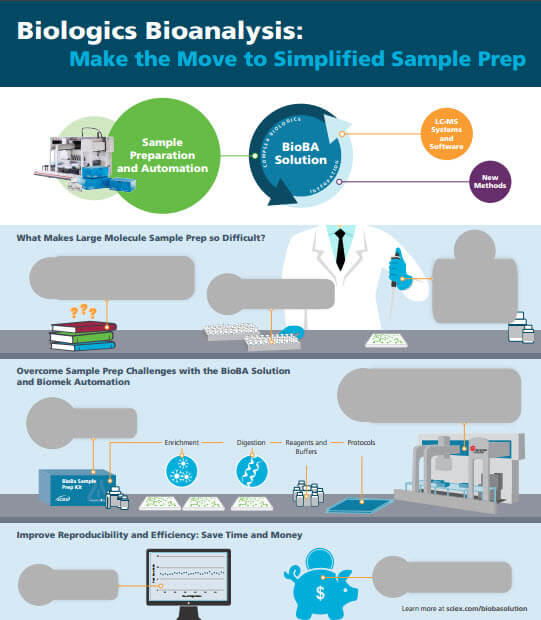
These days, everyone seems to be furiously scratching tickets to become instant winners, but I’ll bet you didn’t expect to find sample prep tips that way. For large molecule bioanalysis, preparing your samples can be one of the biggest challenges. It’s a whole different world from traditional small molecule bioanalysis. SCIEX has developed techniques and automation that make biologics sample prep simpler and faster, with reproducible results.
To find out how to improve your biologics sample prep, simply fill in the form on this page to reveal the answers. Then click on the circles to access more detailed information and videos.
Finding the right information shouldn’t slow you down. Whether you’re troubleshooting your mass spec, learning something new, or optimizing performance, access to the right resources at the right moment makes all the difference.
As an analytical strategy, middle-down mass spectrometry (MS) workflows characterize biotherapeutic proteins by analyzing large, digested protein fragments or defined subunits, rather than fully intact proteins (top-down) or digested peptides (bottom-up). A middle-down strategy combines the strengths of top-down and bottom-up approaches by delivering high sequence coverage and structural specificity while maintaining relatively simple sample preparation. In practice, middle-down analysis enables accurate mass measurement, rapid sequence confirmation, and localization of key post-translational modifications (PTMs) on protein subunits that are directly relevant to product quality.
In biopharmaceutical development, sequence variants (SV) are considered an inherent risk of producing complex proteins in living systems. Sequence variants are unintended changes to the amino acid sequence of a biotherapeutic and can be caused by errors in transcription or translation in the host cell, or cell culture and process conditions. Detailed analysis of SVs is important in process and product development to ensure the drug’s safety and efficacy. Even low‑level sequence variants can have significant implications for product quality, safety, and efficacy, making their accurate detection and characterization a critical requirement across development, process optimization, and regulatory submission.
Posted by
You must be logged in to post a comment.
Share this post with your network