

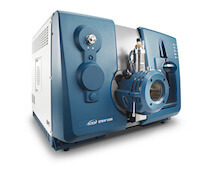
 The United States Environmental Protection Agency (EPA), under the 1996 Safe Drinking Water Act (SDWA), requires a new list of no more than 30 unregulated contaminants to be monitored by public drinking water systems. Known as the Unregulated Contaminant Monitoring Rule (UCMR), a new list is published every five years. The last rule, UCMR3, was published May 2, 2012, and is the focus of the following application note, “Analysis of Perfluoroalkyl (PFFA) Acids Specified under the UCMR3 Using the QTRAP® 6500 LC-MS/MS system,” which can be found in the Food and Environmental Compendium.
Overview
Using the guidelines laid out by EPA Method 537, “A Determination of Selected Perfluoroalkyl Acids in Drinking Water by Solid Phase Extraction and Liquid Chromatography/Tandem Mass Spectrometry (LC-MS/MS),” this application note describes the performance of the QTRAP 6500. Within the scope of EPA 537, there are 14 PFAAs. Six are specified under the UCMR3 monitoring list.
Process
Sample preparation and data processing were carried out according to EPA Method 537 without deviation unless specifically noted. The analysis was carried out using the QTRAP 6500 coupled with the Agilent 1260 HPLC with an Eksigent ULC 100 HTC-xt autosampler. Quantitation using MultiQuant ™ 3.0.
Conclusion
The lower the detection, the harder the QTRAP 6500 works for you as it easily meets the UCMR3 reporting limits. See what more it can do when you download the compendium. Download the compendium >


0 Comments