

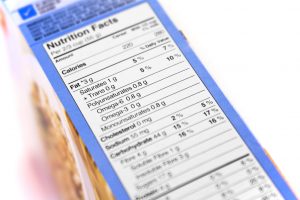
 Don’t judge a nutritional supplement by its label, as often, government monitoring of ingredients begins after the product enters the consumer market1. Meanwhile, there may be additional additives not mentioned on the label as they are used to address supplement side effects. Such is the case in the United States where even though federal law requires supplements to carry a dietary supplement label or a substitutional term, monitoring begins once a supplement is on the market. In China meanwhile, the China Food and Drug Administration’s (CFDA) health product potential illegal additives list, clearly stipulates monitoring processes for additives in six different types of nutritional supplements including weight loss, blood sugar reduction, blood pressure reduction, anti-fatigue, sleep improvement and immune strengthening functions.Read Tech Note >
Keeping up with additives is no small job for the labs tasked with analysis. A research report by Grand View Research notes that “The rising sales of sports nutrition products in the U.S. and China along with new product launches are likely to have a significant impact on the industry. The market is expected to generate revenues worth USD 37.16 billion by 2024.2
Since drug interactions can be unclear, however, they continue to merit clarity. In the following application note, Use of X500R QTOF for Monitoring Unexpected Additives in Nutritional Supplements, researchers used the X500R QTOF high-resolution mass spectrometry and SCIEX OS software for quick and qualitative confirmation of 50 additives. Want to see how your lab can keep up with supplemental screening? Download the tech note to discover how you can overcome matrix interference in complex matrices for the accurate testing of additives such as atenolol, nitrendipine, nifedipine, glibenclamide, glipizide, rosiglitazone, and gliclazide.
- https://www.fda.gov/ForConsumers/ConsumerUpdates/ucm050803.htm
- https://globenewswire.com/news-release/2016/07/18/856668/0/en/Dietary-Supplements-Market-Size-Is-Projected-To-Reach-278-02-Billion-By-2024-Demand-In-Food-Beverage-Sector-Grand-View-Research-Inc.html


0 Comments