

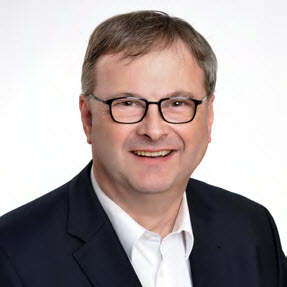
Dr. Wolfgang Schulz, Head of R&D Special Analysis, Laboratory of Operation Control and Research, Zweckverband Landeswasserversorgung
 The production of high-quality drinking water entails rigorous treatment and testing procedures. For water suppliers’ laboratories, such as the Zweckverband Landeswasserversorgung in Germany, one of the major challenges is the identification of trace levels of organic substances, which can be achieved with the help of mass spectrometry.
The Zweckverband Landeswasserversorgung in Stuttgart is one of the largest water supply companies in Germany, delivering around 90 million cubic meters of top-quality drinking water to approximately three million people in more than 250 cities, towns and communities across Baden-Württemberg and Bavaria.
The Laboratory for Operation Control and Research analyzes samples from raw water resources, ground and spring water, and the River Danube, and water treatment plants, ensuring that the drinking water produced meets the stringent microbiological requirements and physicochemical parameters specified by the German Drinking Water Ordinance.
The laboratory has particular expertise in trace analysis of organic contaminants in water; including pesticides, industrial chemicals, pharmaceuticals, and various by-products, a process that presents a number of challenges. Dr. Wolfgang Schulz, Head of R&D Special Analysis, explained, “In 2015, our laboratory analyzed 48,000 samples, which included trace organic analysis of 192,000 individual parameters. The difficulty is that many substances are present at very low concentrations, in the range of low nanograms per liter, and a sample may contain a vast number of contaminants; extremely sensitive analytical methods capable of detecting a diverse array of compounds are vital. There is also the question of how to rapidly and cost-effectively detect and identify unusual or unexpected compounds.”
Wolfgang continued, “In the past, samples were concentrated using solid phase extraction, and then analyzed by GC-MS. However, this method was not suitable for polar compounds, such as transformation products or metabolites. LC-MS was the answer, offering rapid, reliable trace organic analysis, including polar compounds, with the sensitivity we needed. We bought our first SCIEX instrument, a 4000 QTRAP® System, in 2004, allowing us to analyze trace contaminants in the 20 nanograms per liter range by direct injection of the water sample, without the need for pre-concentration.
Since then, we have acquired several more SCIEX systems with different technologies, QTRAP, Triple Quad, and TripleTOF® systems, giving us additional capacity for sample analysis and method development, as well as transferring previous methods to LC-MS.”
“We use two different MS-based approaches to screening; multi-target and non-targeted analysis. Targeted analysis is used to screen for known compounds, using MRM to directly quantify the analytes of interest. Typically, this is carried out on the 4000 QTRAP, or an API 5000™ System.
However, there may be other unknown compounds present in the sample, and the challenge is to identify and quantify these substances. The TripleTOF 5600 System has proven ideal for this purpose, giving us the high resolution and accurate mass required for successful non-targeted analysis.”
“The sensitivity and selectivity of the TripleTOF 5600 is particularly beneficial for applications such as the direct injection analysis of suspected contaminants and non-targeted analyses and has enabled us to develop and validate these methods in house. This gives us the flexibility to add new substances to our protocols as and when necessary. We were one of the first laboratories in the industry to implement non-targeted water analysis; interest in this area has grown considerably in the five or so years since, and today there are several drinking water suppliers working in this field.
I am now the head of a special working group created by the German Water Chemical Society, working with scientists from 20 other laboratories to optimize and establish guidelines for non-targeted analysis by liquid chromatography-high resolution mass spectrometry.”
“All five of our instruments are in routine use, including the original 4000 QTRAP. Having the capability to easily transfer methods between instruments and from one generation of MS systems to another is really important to us, and using SCIEX Instruments has almost become a tradition in our laboratory,” Wolfgang concluded.
Find out more about the SCIEX TripleTOF 5600+ >
This article is from the 2017 edition of the SCIEX VISION journal. You can download the full version of the journal which includes over 10 customer research stories. Download now >


0 Comments