

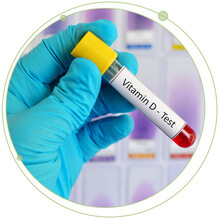
 Last month, Dr. Phil Levy, a clinician, professor, and researcher at Wayne State University, was invited to SCIEX to lecture on ‘Vitamin D Measurement and Implications for Patient Care.’ His message was simple and very clear: Vitamin D testing is here to stay!
He cites that Vitamin D testing is on the rise, and this is mainly due to the many associated conditions and impact on human health driven by risk-association studies linking Vitamin D not only to calcium homeostasis, neurohormonal functions, and the renin-angiotensin-aldosterone system. Also, Vitamin D directly or indirectly controls more than 200 genes, including the regulation of proliferation, differentiation, apoptosis, and angiogenesis, as well as having an inhibitory effect on cellular proliferation and terminal differentiation.
Vitamin D deficiency is a highly prevalent condition, present in approximately 30% to 50% of the general population. As one of the largest send out test volumes for hospitals, it is evident that clinicians want to know the Vitamin D levels of their patients.
Based on data from the OIG, Medicare reimbursed a total of 8.7 million tests in the amount of 337 million dollars. Some mid-sized hospitals we recently spoke to indicated that every patient who is sick will receive a Vitamin D test. It is not unusual for many hospitals to perform 50-60 tests per day, depending on their patient population. One of the largest send out laboratories we spoke to recently boasted performing 4,500 tests per day!
Vitamin D Analysis Made Simple
This probably isn’t breaking news for you, but Vitamin D is the #1 test that laboratories want to bring in-house and reduce send out volumes, read the last blog in this series. LC-MS/MS technology is the gold standard method for testing Vitamin D, offering far greater specificity and accuracy over immunoassay methods. The problem is that LC-MS/MS techniques have traditionally been far too complex for mainstream adoption in clinical diagnostic laboratories.
With 40 years of total devotion to improving the future of scientific discovery and diagnostic accuracy, we simply would not rest until we developed a solution. From the day we launched the first ever commercially successful triple quad in 1981, we have continued to pioneer groundbreaking technologies and earlier this year we were thrilled to unveil the first FDA-cleared (via the de novo pathway) LC-MS/MS based Vitamin D 200M Assay kit, exclusively for the SCIEX Topaz™ System.
The FDA-reviewed Topaz System is a fully integrated platform with an IVD assay driven by ClearCore™ MD, the new and intuitive software designed specifically for use in clinical labs. In a nutshell, ClearCore MD ‘Makes Mass Spec Simple’! It is designed for enhanced LDT development, usability and rapid user adoption, regardless of previous LC-MS/MS experience.
Our Vitamin D 200M Assay kit saves months of method development time, empowering the hospital lab to deliver test results with less complexity for the benefit of better patient care.
- Simple, pre-developed, locked method enables your lab to get up and running quickly
- Chromatographic separation of the D3 epimers to provide accurate results
- Extensive interference testing with over 79 compounds to ensure analyte specificity
- FDA-cleared assay to reduce risk compared to running LDTs
Your Vitamin D samples are ready to run in weeks, not months.
Find out how you can bring Vitamin D testing in-house, save months of method development time and run samples in just weeks with the first FDA-cleared (via the de novo pathway) LC-MS/MS based Vitamin D 200M Assay kit, exclusively for the SCIEX Topaz System.Learn more >


0 Comments