

 We blinked and the last two years went in a flash. It seems like just yesterday, the Dicamba herbicide controversy hit the headlines in 2016 and the EPA set the regulations to expire in two years. Fast forward to today.
Dicamba is an acid herbicide used to kill broadleaf weeds before and after they sprout. This herbicide is designed for a variety of applications; it is registered for use in agriculture on corn, wheat, and other crops, as well as for non-agricultural uses in residential areas, roadways, and other public spaces.
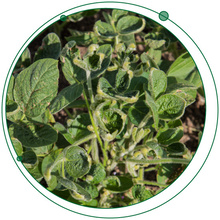
In 2016, the United States faced an agricultural crisis with widespread damage to hundreds of thousands of crop acres due to Dicamba drift. Along with other related acidic herbicides, Dicamba can be picked up by the wind and destroy crops that have not been genetically engineered to resist the chemicals. While the US EPA ruled in favor of continued use and made adjustments in the regulation to control the situation, Dicamba is still causing damage to crops. The University of Missouri has assembled 605 Dicamba-related injury investigations from state departments of agriculture and has estimated 1.1m acres of soybean damage over 14 states in the first 6-months of 2018 (reported July 15).
While the controversy continues, there is no debate around the effectiveness of Dicamba and other related acidic herbicides. Use of these drift-prone herbicides is on the rise and account for more use than all other pesticides combined. Naturally, there is a prevailing concern and the need to determine crop contamination represents a crucial analytical need in environmental monitoring and agricultural testing.
Looking for more information on how to analyze Dicamba and acid herbicides? Fill out the form on your right to get a free method.
The most common analytical approach for these analytes is the US EPA Method 8151: Chlorinated Herbicides by GC Using Methylation or Pentafluorobenzylation Derivatization. Anyone with experience in this method would agree that it is complex ― difficult to perform correctly and time-consuming.
Here are 3 things you need to ask yourself about your current Dicamba analysis method:
The truth is, there are more than 3 questions you should be asking. But by tackling these 3, you could make a huge difference to your workflow and your results.
- Are you performing a derivatization step to improve the analytical capability of your sample?
- Do you have absolute confidence in the recovery, precision, and robustness of your current methods?
- Can you perform direct analysis for a suite of acid herbicides and select degradation products in complex soil and plant samples with limits of detection as low as 0.1 ng/g in the matrix?
Good news, we developed a method that enables you to tackle the analytically challenging acid herbicides (Dicamba and Dicamba metabolites) rapidly and with ease. This method demonstrates:
- How LC-MS/MS eliminates derivatization; thus, saving time
- The sensitivity of LC-MS/MS to utilize negative mode electrospray ionization (ESI−)
- Quantitation ng/L levels for many analytes in neat calibration solutions
- High-quality quantitation, achieving a peak area %CV of 21% across both soy foliage and soil matrices
Click here to get your copy of the technical note.


where to find the form to view the method for the quantification of Dicamba?
Greetings,
Akhil
Hi Akhil,
Thanks for your interest! Please follow this link to get more information.