
GEN-MKT-18-7897-A
Apr 21, 2016 | Biopharma, Blogs | 0 comments
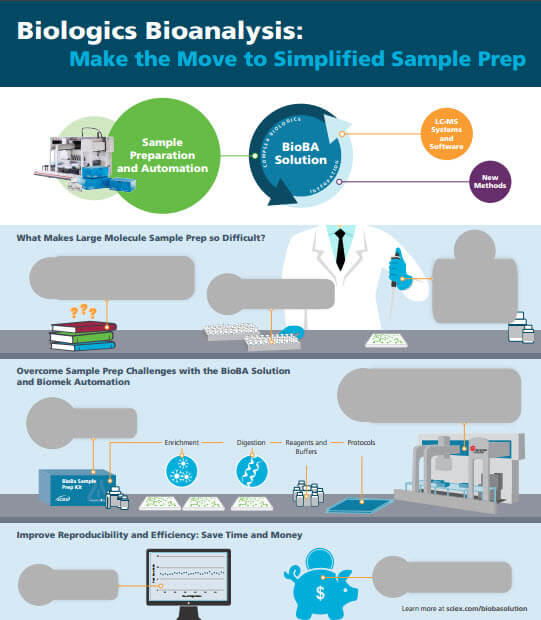
These days, everyone seems to be furiously scratching tickets to become instant winners, but I’ll bet you didn’t expect to find sample prep tips that way. For large molecule bioanalysis, preparing your samples can be one of the biggest challenges. It’s a whole different world from traditional small molecule bioanalysis. SCIEX has developed techniques and automation that make biologics sample prep simpler and faster, with reproducible results.
To find out how to improve your biologics sample prep, simply fill in the form on this page to reveal the answers. Then click on the circles to access more detailed information and videos.
For decades, SCIEX has been part of bioanalytical innovation, empowering scientists in pharma and biopharma to push the boundaries of sensitivity, accuracy, and throughput. Across complex workflows and increasingly challenging therapeutic modalities.
Trifluoroacetic acid (TFA) is emerging as one of the most concerning ultrashort-chain PFAS in Europe’s food supply – particularly in cereals, a staple consumed daily by millions. A report from PAN Europe reveals a widespread and largely unmonitored contamination trend that raises serious questions about food safety, regulatory blind spots, and future monitoring strategies.
PFAS analysis is complex, but expert guidance doesn’t have to be. In this episode of our ‘Ask the PFAS expert series’, we’re joined by Michael Scherer, Application Lead for Food and Environmental, to answer the most pressing questions in PFAS analysis. From why LC-MS/MS systems are the gold standard for analyzing diverse PFAS compounds, to which EU methods deliver reliable results for drinking water, and to practical steps to prevent contamination, Michael shares actionable insights to help laboratories achieve accuracy, consistency, and confidence in their workflows.
Posted by
You must be logged in to post a comment.
Share this post with your network