

 Biopharmaceutical development is booming and now an integral part of many pharmaceutical company pipelines. While these emerging biologics present exciting opportunities for the industry, their sophistication is challenging the limits of characterization at all stages of discovery and development.
Biologic structures are larger and more complex than traditional small molecule drugs, making characterization considerably more challenging and time-consuming. To reliably develop these biologics, and to keep pace, a new level of sophistication in characterization technologies and workflows is needed.
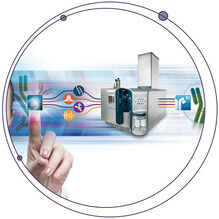
SCIEX hardware and software solutions have been specifically developed to reduce the complexity of biologics characterization. We bring you four technologies in a single powerful, integrated solution: based on the SCIEX X500B QTOF System and BioPharmaView™ Software. With streamlined workflows, SCIEX Biologics Solutions simplify standardized intact protein analysis, subunit analysis, peptide mapping, and comparability analyses.
But don’t just take our word for it, we can prove it too. We have demonstrated the compelling capabilities of our Biologics Solutions in the characterization the biotherapeutic trastuzumab. Trastuzumab is a recombinant IgG1 monoclonal antibody for the treatment of Her2 positive breast cancer. In this case study, we analyzed and compared trastuzumab therapeutic samples from two different manufacturers to assess comparability.Download the Full Report >
To read the full comparative study of the trastuzumab samples with X500B QTOF system and BioPharmaView Software, download the report by completing the short form on the right.
- Intact Mass Analysis: Find out how the high mass accuracy of the X500B QTOF System ensures rapid assessment of the mass of the therapeutic as well as the degree of heterogeneity
- Subunit Analysis: See how you can further assess and characterize the distribution of glycoforms, with reduction of the trastuzumab samples to separate the heavy and light chains
- Peptide Mapping Analysis: Discover the results when the trastuzumab samples from two different manufacturers were denatured, reduced, alkylated and digested with trypsin and then analyzed by LC-MS/MS using an unbiased SWATH® Acquisition methodology
With SCIEX Biologics Solutions the complexity of biotherapeutics characterization is made routine. The powerful hardware of the SCIEX X500B QTOF in combination with SCIEX OS point-and-click software ensures that high-quality data can be acquired in just a few clicks. And BioPharmaView Software simplifies and streamlines complex characterization tasks with its straightforward “click-compare-report” format.Download the Full Report >


0 Comments