

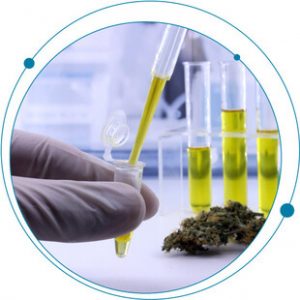
 One question I get asked a lot when it comes to cannabis, specifically regarding marijuana and hemp analysis, is: There are so many techniques to choose from, how do I know which one is best?
I can’t emphasize enough that the Cannabis sativa plant has a complex biological profile with hundreds of chemical entities at varying concentrations. These include both cannabidiol (CBD) and tetrahydrocannabinol (THC).
Because of the complexity of the samples, cannabis labs should consider employing an instrument system that can handle multiple workflows, such as those for potency analysis, pesticide testing, mycotoxin analysis and terpenes profiling. The system also needs to isolate and identify as many compounds as possible and to detect very low concentrations (in the parts per million or parts per billion range).
Before I continue, I should say that there is no perfect method for cannabis testing. Different technologies can impact the quality of your data. One approach can be more effective than another. It depends on the needs of your laboratory. Nevertheless, the characteristics of an ideal analytical technique remain the same: high sensitivity, selectivity, and specificity.
Let’s explore well-known techniques used to analyze marijuana and hemp for pesticides, potency, mycotoxins and terpenes.

Sample separation strategies
- Thin layer chromatography (TLC): A “quick and dirty” approach that has easy sample preparation and is inexpensive, rapid, sensitive (sub-milligram quantities of analyte required) and flexible in the selection of both the stationary and mobile phases. TLC has low detection limits, so it’s not the best method for comprehensive marijuana and hemp analysis.2 This approach also does not achieve as clean a separation as other methods when it comes to polar compounds.1 The other downside is that quantitative calibration curves are not reproducible enough to be stored. It is necessary to co-analyze several standards along with samples on each TLC plate.2
- Gas chromatography (GC): This is a favorite method for some because it is a cost-effective and useful technique to separate volatile organic compounds such as terpenes. While simpler than high-performance liquid chromatography (HPLC), this method relies on time-consuming and tedious sample derivatization to quantify both the free and acid forms of THC and CBD. The main drawback with this approach is that it’s more likely to produce false-positives, especially for nonvolatile compounds. You risk altering molecular structure because the compounds can be decarboxylated into their neutral counterparts as you heat samples for vaporization.
- HPLC: This extensive approach allows you to directly analyze a large number of compounds, including nonvolatile ones, while maintaining their original structure. This technique can effectively quantify THC, THCa, CBD, and CBDa without derivatization, which saves you time. One key issue with HPLC testing of marijuana and hemp samples, however, is contamination that can affect the detector response and lead to inaccurate quantification.
Quantitative methods
- Flame ionization detector (FID): This is a quantitative detector that is paired with GC and that relies on ions produced during combustion. Like GC, FID is a simple, low cost, relatively reliable method that is a widely preferred tool for quality control.3 GC isn’t always an ideal technique for separation, and FID is notably ineffective at distinguishing between non-isobaric terpenes. This approach is also not selective enough for true accuracy.
- Mass spectrometer (MS): Even though it is believed to be more expensive and complicated when compared to FID, MS still offers you a wider dynamic range and more specific detection of most compounds in cannabis. This makes it a reliable choice for simultaneous marijuana and hemp testing. While it can be a better choice than FID, MS is limited when it comes to terpenes that tend to have similar structures. This becomes a problem when MS identifies co-eluting compounds with the same mass and/or mass fragments. The MS is unable to differentiate between them and is unable to quantify those compounds separately.
- Ultraviolet detector (UV): This method is generally accurate, and the approach can measure wide concentration ranges of the compounds in plants. A drawback to UV is that it can be time-consuming because it requires a multiple dilution protocol to identify compounds effectively.
So, my answer to the original question is that the best method involves using HPLC with a dual-detector combination of UV and tandem mass spectrometry (MS/MS) to analyze cannabinoids. It is a highly effective approach. Check out this technical note our team put together that demonstrates this approach to quantifying cannabinoids in marijuana and hemp.
- Galand, N., Ernouf, D., Montigny, F., Dollet, J., & Pothier, J. (2004). Separation and Identification of Cannabis Components by Different Planar Chromatography Techniques (TLC, AMD, OPLC). Journal of Chromatographic Science, 42(3), 130–134. doi: 10.1093/chromsci/42.3.130
- Ojanperä, I. (2000). Forensic Toxicology: Thin-Layer (Planar) Chromatography. Encyclopedia of Separation Science, 2879–2885. doi: 10.1016/b0-12-226770-2/02741-1
- Leghissa, A., Hildenbrand, Z. L., & Schug, K. A. (2017). A review of methods for the chemical characterization of cannabis natural products. Journal of Separation Science, 41(1), 398–415. doi: 10.1002/jssc.201701003


0 Comments