

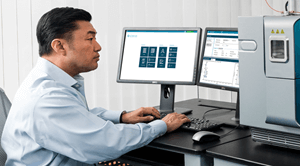
 Did you know the X500B QTOF system makes point and click workflows for Biologics Characterization possible on your mass spectrometer? The newly-designed SCIEX OS software interface brings to life fluid navigation and ease of use so you can keep moving forward on your scientific discoveries. In fact, it’s so simple to learn and operate that you and your team can be up and running faster than you might expect.
Hard to believe? Check out our new video series and see how easy it can be to get started with SCIEX OS on the X500B QTOF system.
Move Your Biotherapeutic Along Faster
What’s different with the X500B? The new SCIEX OS software was built from the ground up to facilitate the X500B’s usability for every scientist, not just mass spec experts. The software uses an intuitive, icon-oriented interface so you can logically set up and optimize new methods. Instead of spending time and money on advanced training, you simply get to work. What’s more, SCIEX OS software features simple point and click method-building tools to create and optimize high-performance methods.
Let Your Productivity Soar the X500B QTOF and SCIEX OS Software:
- Enjoy the no-worry sample queue, which seamlessly incorporates protein calibration into your methods to ensure mass accuracy, even over large batches of samples
- Use the SCIEX OS Explorer function to quickly visualize and review data during acquisition, in real time
- Connect to BioPharmaView data processing software for fast answers to your characterization questions
You’ll be surprised how simple it is to increase your productivity.
Watch the short SCIEX OS introduction video series to see how easy it is for you to get fast, high-quality results in the point and click world.


0 Comments