

 New technologies can transform a laboratory’s throughput and efficiency. At Alturas, if we try out a new technology, we ask:
- Does it work?
- Is it convenient?
- Is it rugged?
- Are we getting good results?
When we look at the convenience, uptime, and overall data that we’re getting from microflow LC-MS/MS with the SCIEX OptiFlow™ Turbo V source – we know we’re getting better results.
In our work, we analyze large molecules from biological fluids and matrices. The traditional approach, using ligand binding assays, can have real selectivity problems – sometimes even stopping a therapeutic in late stage development. Microflow LC and an optimized source system has us declaring: Problem solved!
I recently gave a webinar called, Soup to Nuts of Large Molecule LC-MS/MS Bioanalysis, and you can watch it on-demand now >
In this blog, I’ll share a Q&A based on some of our experiences. It might have you asking if you should switch to microflow LC-MS/MS for your large molecule bioanalysis, too.
Eight Things You Want to Know About Microflow LC-MS/MS and the OptiFlow Turbo V Source
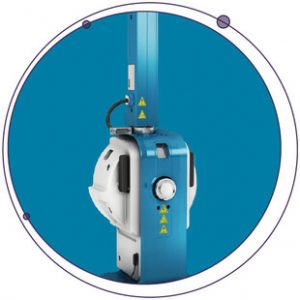
- What is the OptiFlow Turbo V source? It’s an innovation in source technology from SCIEX, optimized for microflow analysis. The design makes it extremely easy to switch over from conventional flow. Convenience is the most important part of technology development to us. If it takes too much effort to use, we wait for the next iteration. This is an easy change, and it works.
- What are the advantages of using the microflow OptiFlow Turbo V source over a conventional source? The biggest thing we saw was performance – specifically gains in area and height, as well as a reduction in noise. A source that is designed for microflow is super critical. You can’t just use your conventional source with microflow systems and expect to get good results.
- What makes the OptiFlow Turbo V source so easy to use? You remove your conventional source and connect your microflow source, change the pump from conventional to microflow and you’re good to go. No tools or manual source adjustments are required. We’re talking one minute!
- When you evaluated the advantages of the OptiFlow Turbo V source over a conventional source, did you optimize source conditions for each source? No, the voltages and gas flow rates were left the same. Our offline experiments showed that the optimized source conditions for the normal source were almost exactly the same as for the OptiFlow source. Productivity is a focus at Alturas. If it doesn’t work with minimal optimization, it probably won’t gain much traction in our lab.
- What lower limits of detection can you achieve with the OptiFlow Turbo V source? This depends on the class of molecule, whether it’s a peptide, small molecule, or large molecule, for example. We can easily reach an LOD of around 1 ng/mL for most peptides using microflow, compared to 5 ng/mL with normal flow. We definitely see a signal increase with microflow.
- What are the major cons of microflow technology? The pros definitely outweigh the cons. Whatever the industry, things are getting smaller and smaller, and microflow is a part of that. An optimized system is key. From an analytical standpoint, dirty samples require some sample clean up because of the risk of small diameter electrodes clogging. You also might not see a small leak right away because of the small volumes.
- How does downtime and troubleshooting compare between microflow LC and conventional UHPLC? We experience more uptime. You inject less and can get a better signal using microflow. The lower volumes reduce contamination in your mass spectrometer. The cleaner your instrument and source, the less downtime you have. From a troubleshooting perspective, our optimized system notifies us of errors, so we can fix them quickly.
- What’s the learning curve for a lab switching from conventional flow LC-MS/MS to microflow? There really isn’t one. If you know how to use a mass spec with a conventional pump, it’s a 10-minute training exercise. Remove your existing source, attach the OptiFlow Turbo V source, and change the pump and flow rate. It really is seamless.
We hope our answers have been helpful to you! If you’d like more details about our work, please watch this video.
Learn more about the SCIEX OptiFlow Turbo V Source >


0 Comments