Search
Page 56 of 61
Mass Spec Strategies for Plant Metabolomics
The metabolome is the set of all low molecular weight compounds (typically less than ~2000 Da) that are present within an organism, tissue, or cell. Within the mass spectrometry (MS) community, the systematic and comprehensive analysis of the metabolome – i.e., metabolomics – has become an important and increasingly popular area of research. Because the metabolome is dynamic and ever-changing, it provides a snapshot into the state of the organism at the time of measurement. Compounds may appear or disappear, or quantities may change, depending on environmental factors and internal processes. Thus, the metabolome can be thought of as a unique chemical signature providing important information about the health and inner-workings of a biological system at any given moment in time.

Tags: Metabolomics, TripleTOF Systems, XCMS Plus Software
June 22, 2016
Glyphosate, a Polar Pest Put to Test
No other pesticide has courted more media attention and controversy in recent months than glyphosate, with governments and national agencies debating its use and health effects.

Tags: biotherapeutic development, blaze, charge, company, couple, development, Environmental, Food / Beverage, job, machine, mass, money, new, number, power, protein, rapid, system, technology, time, variant, work
June 20, 2016
Using Mass Spec to Detect Trace Explosives
The importance of protecting a country’s border is a very topical issue. The war on drugs and terror is a 24/7 task 366 days a year (2016 is a leap year). The government agencies in charge must be vigilant and maintain instrumentation to prevent terrorism, drug trafficking, and other illegal activities. Mass Spectrometry is rapidly becoming the instrument of choice for border agencies throughout the world when it comes to explosive trace detection and forensic drug compounds.

Tags: biotherapeutic development, blaze, charge, company, couple, development, job, machine, mass, money, new, number, power, protein, rapid, system, technology, time, variant, work
June 3, 2016
Routine Food Testing Using Mass Spectrometry
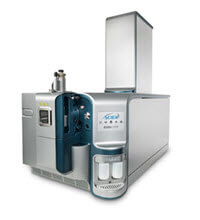
These days, it is not uncommon to hear about the overzealous application of pesticides to crops or the injection of antibiotics into animals. From grocery stores to restaurants, our food is at risk. How then, can consumers be assured that chemical contaminants like these , not to mention the risk of mycotoxin compounds are not making their way to your dinner table?
Tags: biotherapeutic development, blaze, charge, company, couple, development, Food / Beverage, job, machine, mass, money, new, number, power, protein, rapid, system, technology, time, variant, work
May 26, 2016
Industrialize Your Quantitative Proteomics Using a More Simplified Sample Prep
in part 1 and part 2 of this blog series we discussed how you can increase your efficiency for high throughput quantitative proteomics by industrializing your sample analysis and data processing. Microflow SWATH® Acquisition on your TripleTOF® system coupled with OneOmics™ data analysis tools allow you to run samples faster, collect data faster, and process your data files faster. It all adds up to getting more meaningful biological information in a shorter amount of time.

Tags: application, company, computer, different, form, guide, information, ion, job, machine, mass, method, option, research, science, sensitivity, system, time, triple, work
May 24, 2016
Quantify and Identify Pesticides in Complex Food Samples Using the QTRAP 6500 LC-MS/MS System
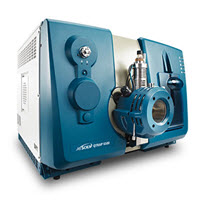
Recent regulations on food analysis require screening for pesticides using confirmatory techniques, such as GC-MS and LC-MS/MS. More than 1000 pesticides are used worldwide and, along with their metabolites and degradation products, are present in food. There is a demand for powerful and rapid analytical methods that can identify pesticides with high confidence in a broad range of food matrices and quantify at low concentrations with good accuracy and reproducibility. Challenges for pesticide residue laboratories at the moment are the request to test for more compounds, in a wider range of samples, all without sacrificing data quality.
Tags: biotherapeutic development, blaze, charge, company, couple, development, Food / Beverage, job, machine, mass, money, new, number, power, protein, rapid, system, technology, time, variant, work
May 13, 2016
Industrialize Your Quantitative Proteomics with the OneOmics Project
For many labs, the days are long gone when it was acceptable to run only a few samples a week for your quantitative proteomics projects. The pressure for faster turn-around times, to support larger cohort studies, to sustain multiple research directions, and to transition from a purely unbiased discovery mode to verifying something truly unique and interesting, all demand a faster pace. Many labs are now being asked to analyze a hundred samples a week or more. In part 1 of this blog series, we saw how moving to a microflow SWATH workflow can dramatically increase your throughput with little compromise on overall results. In this part, we’ll address what to do with all of this data because it’s just no good if all we’ve done is move the bottleneck downstream.
Tags: application, company, computer, different, form, guide, information, ion, job, machine, mass, method, OneOmics, option, Proteomics, research, science, sensitivity, system, time, triple, TripleTOF Systems, work
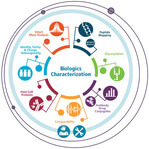
Fast, Efficient, Disulfide Bond Mapping Using BioPharmaView™ Software
Fast LC-MS acquisition and automated data processing will help you speed up peptide mapping of your biotherapeutic, including critical disulfide bond and post-translational modification characterization. SCIEX helps you untangle the complexity of disulfide bonds, speeding up your characterization process.
Tags: Biopharma, biotherapeutic development, blaze, charge, company, couple, development, job, machine, mass, money, new, number, power, protein, rapid, system, technology, time, variant, work
May 11, 2016
Industrialize Your Quantitative Proteomics with Microflow Analysis
Many groups around the world are now using SWATH Acquisition on TripleTOF Systems for both quantitative proteomics experiments and biomarker research. The SWATH acquisition technique on a TripleTOF® 6600 system provides state-of-the-art quantitative proteomics analysis with unrivaled proteome coverage. With this workflow, researchers can routinely quantify 1000s of proteins per run, reproducibly, and with high data completeness – all with the quantitative accuracy approaching that of a gold standard MRM approach.
Tags: MicroLC, Proteomics, TripleTOF Systems
May 4, 2016
Bottom-Up Proteomics: A Discussion with Christie Hunter
Biocompare recently featured an article on Bottom-Up Proteomics. I had a chance to follow up with Christie Hunter and expand on some of the questions featured in the article:
Tags: biotherapeutic development, blaze, charge, company, couple, development, job, machine, mass, money, new, number, power, protein, Proteomics, rapid, system, technology, time, TripleTOF Systems, variant, work
May 2, 2016
Page 56 of 61