Search
Page 55 of 61
Improved complex sample processing for higher quality of results, reproducibility and depth of proteomic analysis
SCIEX partners to improve depth of proteome coverage
SCIEX and Pressure BioSciences address a major challenge for researchers performing complex sample preparation by marketing a complete solution to increase the depth, breadth, and reproducibility of protein extraction, digestion, and quantitation in all tissue types, especially challenging samples like tumors.

Tags: application, company, computer, different, form, guide, information, ion, job, machine, mass, method, option, Proteomics, research, science, sensitivity, system, time, triple, TripleTOF Systems, work
July 28, 2016
Perfluoroalkyl Acids in Drinking Water – EPA Method 537
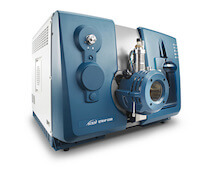
The United States Environmental Protection Agency (EPA), under the 1996 Safe Drinking Water Act (SDWA), requires a new list of no more than 30 unregulated contaminants to be monitored by public drinking water systems. Known as the Unregulated Contaminant Monitoring Rule (UCMR), a new list is published every five years. The last rule, UCMR3, was published May 2, 2012, and is the focus of the following application note, “Analysis of Perfluoroalkyl (PFFA) Acids Specified under the UCMR3 Using the QTRAP® 6500 LC-MS/MS system,” which can be found in the Food and Environmental Compendium.
Tags: biotherapeutic development, blaze, charge, company, couple, development, Environmental, job, machine, mass, money, new, number, power, protein, rapid, system, technology, time, variant, work
July 26, 2016
SCIEX helps set food standards in China
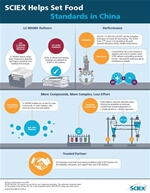
One of the biggest concerns of Chinese citizens is food safety1. Even though China ranks second in global economies2, crowding, industrial pollution, labor and certain agriculture practices have contributed to this. In October 2015, however, we began to see a turnaround as the Chinese government revised its 2009 Food Safety Law in an attempt to strengthen its food supply oversight and quality.
Tags: biotherapeutic development, blaze, charge, company, couple, development, Food / Beverage, job, machine, mass, money, new, number, power, protein, rapid, system, technology, time, variant, work
Discover the new and accurate SCIEX way to enhance your routine food allergen testing
Food allergy is an immune-mediated, adverse reaction to an antigenic protein. Even limited exposure to an antigen can provoke a significant reaction in sensitive individuals, causing rashes, itching and swelling in the mouth, nausea, vomiting, and asthma. Additionally, food allergies are the leading cause of anaphylaxis, an acute, potentially deadly allergic reaction. The prevalence and severity of food allergies are rising, with approximately 150 million people suffering from food allergies worldwide.1, 2 Presently, there is no cure for food allergies, and sufferers must rely on the correct labeling of foods to avoid consuming allergens. Hence, the development of sensitive and accurate analytical methods to screen for the presence of allergens in food products is necessary for the prevention of potentially life-threatening health problems for allergy sufferers.

Tags: biotherapeutic development, blaze, charge, company, couple, development, Food / Beverage, job, machine, mass, money, new, number, power, protein, rapid, system, technology, time, variant, work
July 21, 2016
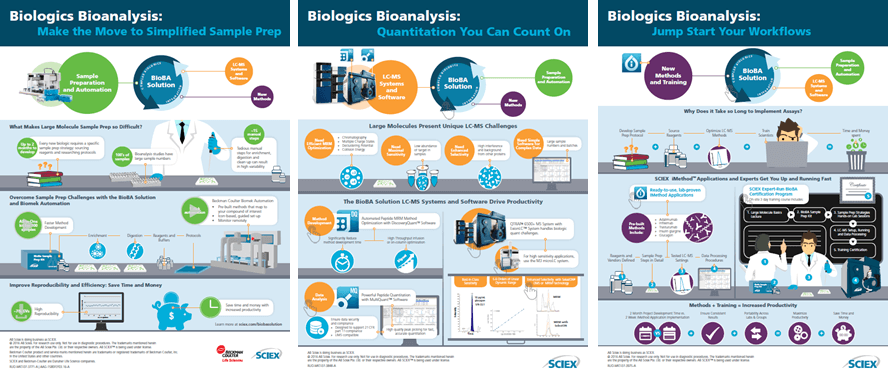
Three Infographics to Show You How to Overcome Challenges in Transitioning to Biologics Bioanalysis
The move to large molecules in Pharma is accelerating, offering unprecedented opportunities to improve human health and expand into new markets. But for those with extensive experience with small molecule bioanalysis, the shift to biologics can be challenging, from Sample Prep to Instrumentation and Software, to Methods and Training:
Tags: Biopharma, biotherapeutic development, blaze, charge, company, couple, development, job, machine, mass, money, new, number, power, protein, rapid, system, technology, time, variant, work
July 8, 2016
Rapid Characterization of Biologics using CESI-MS
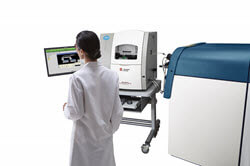
Today, 30 monoclonal antibodies (mAbs), have been approved for the treatment of certain cancers, autoimmune and infectious diseases. Even more are in development, and perhaps you and your team of scientists are working on one now. Keeping pace with fast development timelines while performing comprehensive characterization of biologic candidates can be challenging. However, more and more, scientists are tackling these challenges with new techniques to speed and simplify their characterization workflows. Read more in the application note, “Rapid Characterization of Biologics using a CESI 8000 – SCIEX TripleTOF® System,” found in the Biologics Analytical Characterization Compendium, which highlights how CESI separation coupled with high-resolution mass spectrometry can provide a comprehensive characterization of biotherapeutics.
Tags: Biopharma, biotherapeutic development, blaze, charge, company, couple, development, job, machine, mass, money, new, number, power, protein, rapid, system, technology, time, variant, work
July 7, 2016
The Not So Hidden Truth about Climate Change How It’s Poisoning Your Food
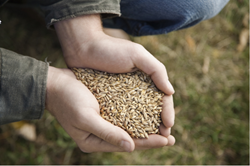
Did you know climate change could be poisoning your food? According to the United Nations Environmental Program (UNEP) report on Emerging Issues of Environmental Concern, rising temperatures are making crops more toxic.
Tags: biotherapeutic development, blaze, charge, company, couple, development, Food / Beverage, job, machine, mass, money, new, number, power, protein, rapid, system, technology, time, variant, work
July 1, 2016
Guardians of Antibiotics
This second is a blog series on the global war: Rise of Superbugs! Part 1 took a critical look at the antibiotic threat we face in today’s battlefield. The waning effectiveness of antibiotics as we head into what may seem like a post-antibiotic era has impelled new reformation to at the very least control antibiotic usage to ensure food safety.

Tags: biotherapeutic development, blaze, charge, company, couple, development, Food / Beverage, job, machine, mass, money, new, number, power, protein, rapid, system, technology, time, variant, work
June 28, 2016
Protein Quantitation Workflows using the TripleTOF 6600: A Case Study for Rituximab
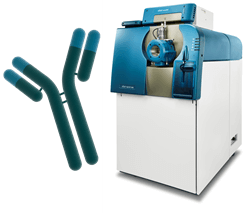
Although the triple-stage quadrupole (QQQ) mass spectrometer remains the pillar for quantitative LC-MS/MS bioanalytical assays, due in part to the platforms’ high duty cycle when operated in multiple-reaction monitoring (MRM) mode, the applicability of high-resolution mass spectrometry (HRMS) has become of increasing importance for protein quantitation given the complexity of proteolytically digested samples in the surrogate peptide approach. While the QQQ demonstrates high sensitivity and specificity, the relatively low-resolution measurement of m/z may fail to differentiate analyte response from nominally isobaric background interference. In contrast, HRMS with accurate mass assignment of product ion allows interference to be resolved through judicious selection of a post-acquisition mass extraction window whose tolerance is largely dictated by the effective resolution and stability of mass calibration.
Tags: Biopharma, biotherapeutic development, blaze, charge, company, couple, development, job, machine, mass, money, new, number, power, protein, rapid, system, technology, time, variant, work
Rise of the Super Bugs
The term “antibiotic-free” is becoming more and more popular in food advertising these days. Take Subway for example; in March the company elevated their antibiotic-free policy and introduced a new antibiotic-free rotisserie-style chicken sub, and they plan to, “Nix antibiotics in all its meat by 2025.”

Tags: biotherapeutic development, blaze, charge, company, couple, development, Food / Beverage, job, machine, mass, money, new, number, power, protein, rapid, system, technology, time, variant, work
June 23, 2016
Page 55 of 61