We blinked and the last two years went in a flash. It seems like just yesterday, the Dicamba herbicide controversy hit the headlines in 2016 and the EPA set the regulations to expire in two years. Fast forward to today. Dicamba is an acid herbicide used to kill...
Tags

Why traditional MS/MS falls short for ADCs and how electron-activated dissociation (EAD) changes the equation
Antibody-drug conjugates (ADCs) are among the most promising—and analytically demanding—modalities in biopharma today. By combining large, heterogeneous antibodies with chemically labile payloads and linkers, ADCs introduce a level of structural complexity that challenges conventional analytical workflows. It also poses the challenge that the very features you need to measure are often the easiest to lose during analysis.
Managing ADC characterization: The challenge of turning complexity into confidence
Unlike traditional monoclonal antibodies, ADCs combine an antibody backbone with linker chemistry and a cytotoxic payload. This multi-component architecture introduces overlapping layers of heterogeneity, including drug-to-antibody ratio (DAR) distributions, charge variants, post-translational modifications, and structural changes at both the intact and subunit levels. Across ADC development, these characteristics are considered critical quality attributes that must be characterized, understood, and monitored.

Your success and voice go a long way!
At the heart of everything we do is ensuring that your workflows and team are empowered to achieve optimal results with your SCIEX instruments, software, consumables, and services. Every interaction with SCIEX is designed to support your success through the dedication...

Pharma perspectives: The influence of LC-MS innovation on drug development outsourcing
It is no secret that (bio)pharmaceutical research and development is complex, both scientific and regulatory processes. Working for a contract research organization and more recently for SCIEX has provided an interesting perspective on trends the market experiences that affect many of us.

6 Signs it’s time for a new vendor
A lab’s success depends on many factors from instrument quality to efficient operations, including being partnered with the right vendor. A vendor is more than just a supplier. They should provide you with a high-level quality of support in maximizing the lifespan and performance of your systems, reducing downtime, enhancing ROI and more. How do you know if you’re partnered with the right one? Here are six signs it might be time to find someone new.

Selecting an LC-MS system for quantitation of pharmaceutical drug development
We understand you are busy, needing to prioritize running instruments, reporting results and managing your laboratory to meet deadlines. We created a solution guide to explain how SCIEX systems fit in the drug development pipeline to save you time evaluating options.

Guide decisions during cell line development with more information at the intact level
Monitoring product quality attributes (PQAs) throughout monoclonal antibody (mAb) development is vital to ensuring drug safety and efficacy. By adopting orthogonal analytical techniques and integrating new technologies that have the potential to provide more information, it is possible to improve product quality and manufacturing efficiency and make more informed decisions.
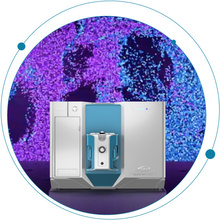
Breaking down the SCIEX 7500 system
Sensitivity and robustness carry different meanings in the world of mass spectrometry. Generally, sensitivity refers to an instrument’s ability to achieve lower limits of detection (LOD). Robustness, on the other hand, refers to an instrument’s ability to consistently...

The honey sting
As a consumer it’s hard for me not to feel inundated with claims that our food is “all-natural” or “chemical-free” or that we should buy certain “superfoods” for their health benefits. We read labels and trust that the product we are buying is what we are truly...

Innovation that’s blasting through limitations in explosive detection
Mass spectrometry’s important role in identifying explosives The need for rapid explosive detection is now an unfortunate reality. The remit is multifaceted. The first is for preventative purposes, to protect us from any threat to life. The second is in the...
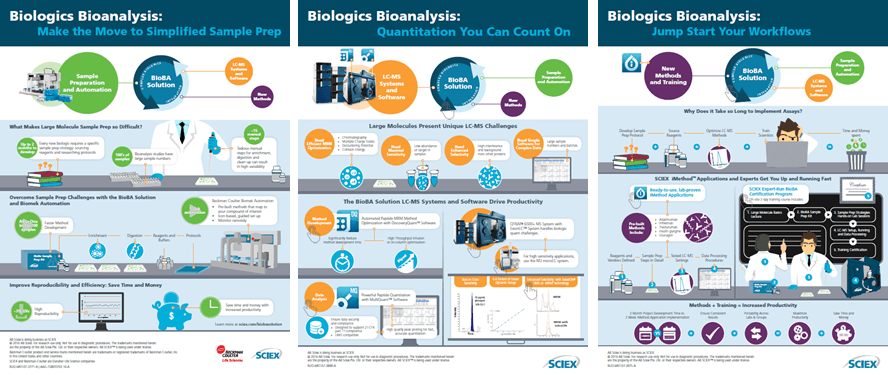
Three Infographics to Show You How to Overcome Challenges in Transitioning to Biologics Bioanalysis
The move to large molecules in Pharma is accelerating, offering unprecedented opportunities to improve human health and expand into new markets. But for those with extensive experience with small molecule bioanalysis, the shift to biologics can be challenging, from Sample Prep to Instrumentation and Software, to Methods and Training:
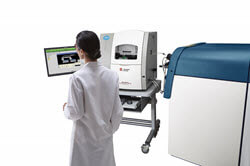
Rapid Characterization of Biologics using CESI-MS
Today, 30 monoclonal antibodies (mAbs), have been approved for the treatment of certain cancers, autoimmune and infectious diseases. Even more are in development, and perhaps you and your team of scientists are working on one now. Keeping pace with fast development timelines while performing comprehensive characterization of biologic candidates can be challenging. However, more and more, scientists are tackling these challenges with new techniques to speed and simplify their characterization workflows. Read more in the application note, “Rapid Characterization of Biologics using a CESI 8000 – SCIEX TripleTOF® System,” found in the Biologics Analytical Characterization Compendium, which highlights how CESI separation coupled with high-resolution mass spectrometry can provide a comprehensive characterization of biotherapeutics.

The Not So Hidden Truth about Climate Change How It’s Poisoning Your Food
Did you know climate change could be poisoning your food? According to the United Nations Environmental Program (UNEP) report on Emerging Issues of Environmental Concern, rising temperatures are making crops more toxic.

Guardians of Antibiotics
This second is a blog series on the global war: Rise of Superbugs! Part 1 took a critical look at the antibiotic threat we face in today’s battlefield. The waning effectiveness of antibiotics as we head into what may seem like a post-antibiotic era has impelled new reformation to at the very least control antibiotic usage to ensure food safety.
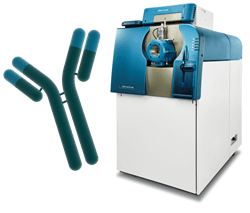
Protein Quantitation Workflows using the TripleTOF 6600: A Case Study for Rituximab
Although the triple-stage quadrupole (QQQ) mass spectrometer remains the pillar for quantitative LC-MS/MS bioanalytical assays, due in part to the platforms’ high duty cycle when operated in multiple-reaction monitoring (MRM) mode, the applicability of high-resolution mass spectrometry (HRMS) has become of increasing importance for protein quantitation given the complexity of proteolytically digested samples in the surrogate peptide approach. While the QQQ demonstrates high sensitivity and specificity, the relatively low-resolution measurement of m/z may fail to differentiate analyte response from nominally isobaric background interference. In contrast, HRMS with accurate mass assignment of product ion allows interference to be resolved through judicious selection of a post-acquisition mass extraction window whose tolerance is largely dictated by the effective resolution and stability of mass calibration.

Rise of the Super Bugs
The term “antibiotic-free” is becoming more and more popular in food advertising these days. Take Subway for example; in March the company elevated their antibiotic-free policy and introduced a new antibiotic-free rotisserie-style chicken sub, and they plan to, “Nix antibiotics in all its meat by 2025.”

Glyphosate, a Polar Pest Put to Test
No other pesticide has courted more media attention and controversy in recent months than glyphosate, with governments and national agencies debating its use and health effects.

Using Mass Spec to Detect Trace Explosives
The importance of protecting a country’s border is a very topical issue. The war on drugs and terror is a 24/7 task 366 days a year (2016 is a leap year). The government agencies in charge must be vigilant and maintain instrumentation to prevent terrorism, drug trafficking, and other illegal activities. Mass Spectrometry is rapidly becoming the instrument of choice for border agencies throughout the world when it comes to explosive trace detection and forensic drug compounds.
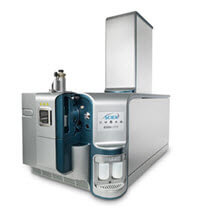
Routine Food Testing Using Mass Spectrometry
These days, it is not uncommon to hear about the overzealous application of pesticides to crops or the injection of antibiotics into animals. From grocery stores to restaurants, our food is at risk. How then, can consumers be assured that chemical contaminants like these , not to mention the risk of mycotoxin compounds are not making their way to your dinner table?
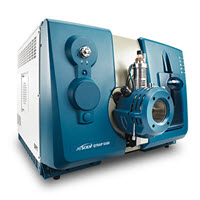
Quantify and Identify Pesticides in Complex Food Samples Using the QTRAP 6500 LC-MS/MS System
Recent regulations on food analysis require screening for pesticides using confirmatory techniques, such as GC-MS and LC-MS/MS. More than 1000 pesticides are used worldwide and, along with their metabolites and degradation products, are present in food. There is a demand for powerful and rapid analytical methods that can identify pesticides with high confidence in a broad range of food matrices and quantify at low concentrations with good accuracy and reproducibility. Challenges for pesticide residue laboratories at the moment are the request to test for more compounds, in a wider range of samples, all without sacrificing data quality.
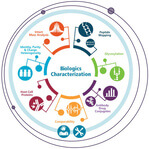
Fast, Efficient, Disulfide Bond Mapping Using BioPharmaView™ Software
Fast LC-MS acquisition and automated data processing will help you speed up peptide mapping of your biotherapeutic, including critical disulfide bond and post-translational modification characterization. SCIEX helps you untangle the complexity of disulfide bonds, speeding up your characterization process.

Bottom-Up Proteomics: A Discussion with Christie Hunter
Biocompare recently featured an article on Bottom-Up Proteomics. I had a chance to follow up with Christie Hunter and expand on some of the questions featured in the article:

Characterize and Monitor Host Cell Proteins (HCPs) Using SWATH Acquisition Technology
During drug development, the removal of impurities and purification of a final drug product is absolutely essential in order to ensure the safety and efficacy of a therapeutic drug. Of particular concern for biologics are impurities that can stem from host cell proteins. Because biologics are developed through cell culture and fermentation within a host cell, proteins from this host cell can be co-purified with the final biologic. These host cell proteins or HCPs can cause the final product to have undesired side-effects such as eliciting an immune response in patients taking the drug, or affecting the drug’s stability or efficacy. As a result, regulating agencies require drug companies to monitor levels of HCPs during the development and purification of a biologic and to remove HCPs to an acceptable level in the final biotherapeutic product.
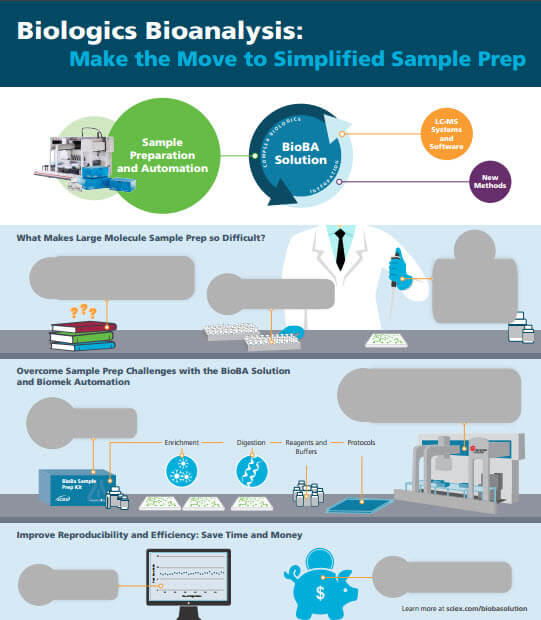
Simplifying Biologics Bioanalysis Sample Prep
These days, everyone seems to be furiously scratching tickets to become instant winners, but I’ll bet you didn’t expect to find sample prep tips that way. For large molecule bioanalysis, preparing your samples can be one of the biggest challenges. It’s a whole different world from traditional small molecule bioanalysis. SCIEX has developed techniques and automation that make biologics sample prep simpler and faster, with reproducible results.

The Connection Between Mass Spectrometry and Space Exploration
Mass spectrometry has been used for some pretty fascinating applications in our world – like testing for steroid use in athletes1, measuring pesticides in grapes2, assessing the efficiency of a psoriasis drug3, and whether that expensive bottle of 100% olive oil is, well, really 100% olive oil.4 But did you know mass spec is also used out of this world? Like… in space?
The Future of Biologics Drug Development is Today
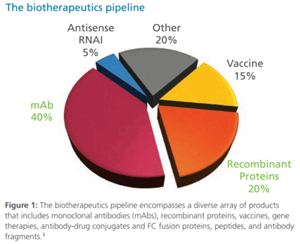
Since the 1982 approval of Eli Lilly’s recombinant human insulin, Humulin, biotherapeutic drug development has steadily grown into a global market valued at $140 billion in 2013, increased from $25 billion in 2001
A Hybrid LBA/LC-MS Assay – Your Questions Answered
Last week we posted a blog on Biologics Bioanalysis Key Challenges, where we presented a webinar on those key challenges.
Using Mass Spectrometry to Identify and Quantify Contaminants in Water Samples
Access to clean wholesome water is one of our basic human rights. Human engineering has designed incredible methods to collect, filter, purify, store and distribute water to billions of us worldwide, but does this mean that our water is completely safe to drink? Also,...
LC-MS/MS Method for Biotherapeutic Drug Development Challenges
Traditionally, the pharmacokinetic profile of biotherapeutics such as insulin glargine, adalimumab, trastuzumab and others, used gold standard LBAs to assess dose-response during drug discovery and development. However, LBAs require a specific antibody reagent to be developed for each mAb variant, a process that is often incompatible with the compressed timeframes encountered during the initial stages of drug development.
QTOF Technology for Targeted and Unknown Forensic Drugs Screening Workflows
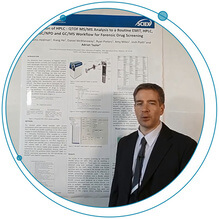
In this study, the Wisconsin State Laboratory of Hygiene (WSLH) outlines the comparison of their existing technology and how SCIEX LC-MS/MS systems can assist them in their forensic research. The WSLH routinely analyze for 300 forensic drug compounds in over 18,000 samples per year.