The journey to mass spectrometry (LC-MS/MS) adoption from immunoassay can be complicated, but certainly rewarding. While immunoassay has been considered the default methodology for decades, they can be susceptible to interferences and cross-reactivity, especially for...
Tags

ADC analytics FAQs: Answering the most common questions about ADC characterization
Antibody-drug conjugates (ADCs) have emerged as one of the fastest-growing classes of biotherapeutics, combining the targeting specificity of monoclonal antibodies with the potency of cytotoxic payloads. However, this unique architecture also introduces significant analytical complexity. From drug-to-antibody ratio (DAR) distributions and charge variants to conjugation sites and structural modifications, ADCs present multiple, interconnected sources of heterogeneity that must be understood to ensure product quality and performance.
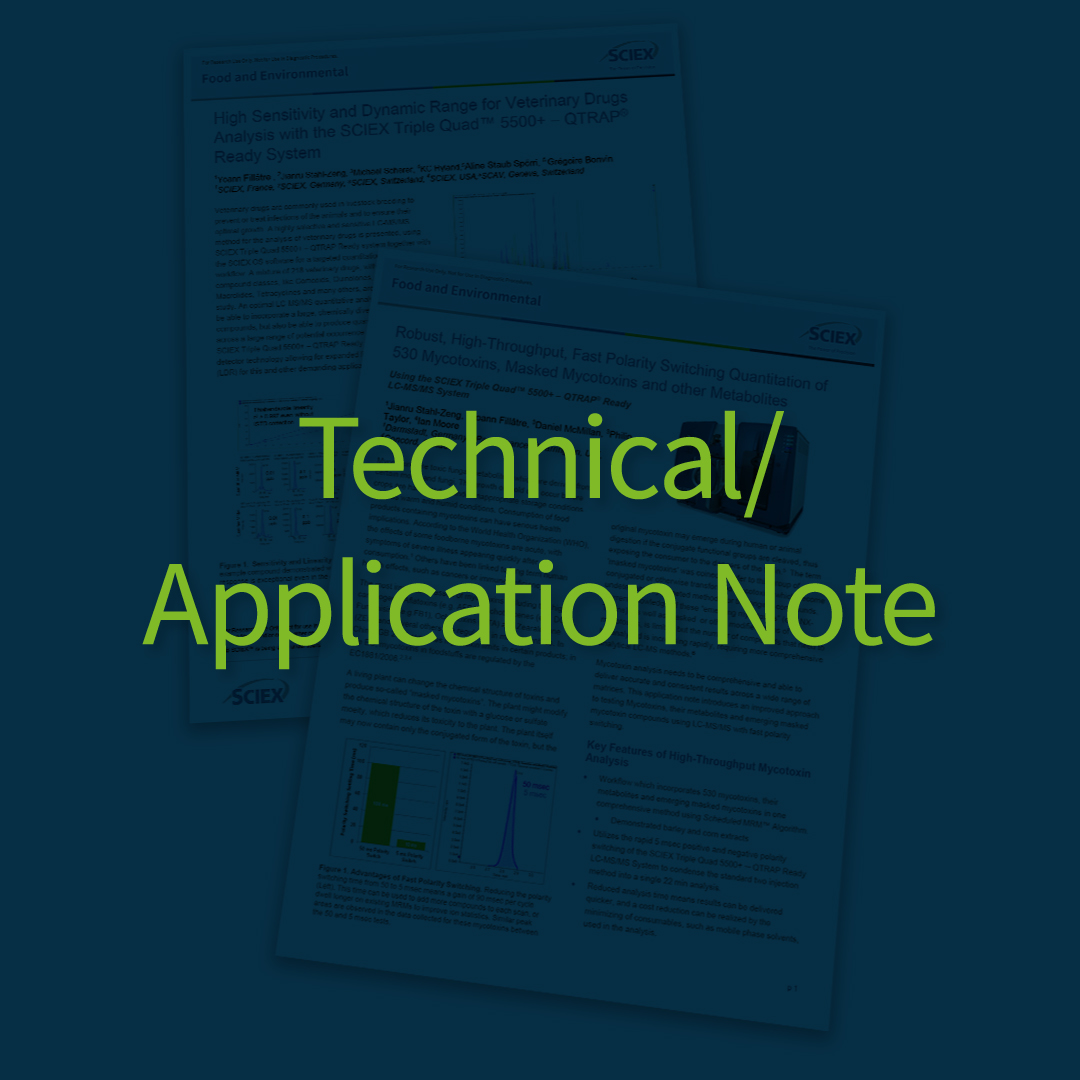
Advanced analytics for mAb variants
Access mab-variants-infokit>
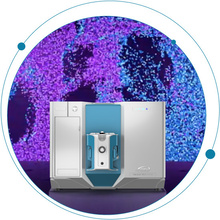
Breaking down the SCIEX 7500 system
Sensitivity and robustness carry different meanings in the world of mass spectrometry. Generally, sensitivity refers to an instrument’s ability to achieve lower limits of detection (LOD). Robustness, on the other hand, refers to an instrument’s ability to consistently...

The honey sting
As a consumer it’s hard for me not to feel inundated with claims that our food is “all-natural” or “chemical-free” or that we should buy certain “superfoods” for their health benefits. We read labels and trust that the product we are buying is what we are truly...

Innovation that’s blasting through limitations in explosive detection
Mass spectrometry’s important role in identifying explosives The need for rapid explosive detection is now an unfortunate reality. The remit is multifaceted. The first is for preventative purposes, to protect us from any threat to life. The second is in the...

A new generation of therapeutic modalities
There are over 7,000 genetic diseases that could potentially be cured using gene therapy. Rare metabolic diseases, autoimmune disorders, cardiovascular disease and cancers are some of the top disease classes that can be addressed with gene therapies. With over 1,000...
Enhancing Biologics with CESI-MS Characterization
Comprehensive characterization of a biologic requires analysis at both the intact and digest levels, but these analyses can be complex and cumbersome. For example, with conventional liquid chromatography separations, researchers are often left with limited information...

Full, partial and empty capsid ratios for AAV analysis: What’s the big deal?
For many of you working to develop gene therapy drugs, you know that the time to market the drug is critical. Because gene therapeutics cure diseases by targeting specific genes, it is a constant race to see who develops the drug first. Unlike other classes of drugs where multiple medications can be used to treat a disease, whoever is first to develop a gene therapy drug wins.
Accurate mass LC-MS/MS for PFAS analysis without needing a blockbuster budget
If you’ve been following our recent blogs, you’ve probably seen quite a bit on how per- and polyfluoroalkyl substances (PFAS) are shaking up both the food and environmental industry. Even if you’ve not been following our blogs, you’ve probably seen a lot of media...

A rising star in food allergen research: proteomics of shellfish allergen
It’s important to know what you’re eating, especially if you suffer from a food allergy.
About 220 million people worldwide live with a food allergy.1 These numbers, along with the complexity and severity of conditions, continue to rise. In America, there are about 32 million food allergy sufferers—5.6 million of those are children under the age of 18.2.2 That’s 1 out of every 13 children, or about 2 in every classroom. From a financial perspective, the cost of food allergy childcare for US families is up to $25 billion

5 Reasons Why Mass Spec is Transforming Clinical Labs
According to the American Clinical Laboratory Association, more than 7 billion clinical lab tests are performed in the U.S. every year. While mass spectrometry represents only a fraction of the clinical applications, there are a growing number of tests where mass...

Save Effort. Save Time. Consolidate Your BioTherapeutic Quality, Safety, and Efficacy Assessments with One Direct LC-MS MAM Assay.
In a previous blog, we learned how you could Simplify Your Life with a Streamlined Workflow for Multiple Attribute Methodology (MAM). Based on the well-known technique of peptide mapping, a Liquid Chromatography-Mass Spectrometry-based MAM workflow (LC-MS MAM) enables...
Metabolism and Biotransformation – What Are You Missing?
Are you looking to improve your MetID studies? Want to achieve the productivity and throughput you need to keep your projects moving and have complete confidence that you’re not missing any low level or parent-like metabolites in your sample? In this blog, we’re...

Biologics Characterization: Intact and Subunit Mass Analysis
When All You Need Is Range – Mass Range, Dynamic Range, and the Complete Range Launching the best possible product in the shortest time possible is key for pharmaceutical companies like you. As you know, nearly every process throughout the biologics development cycle...

Now You Can Overcome Your Food and Environmental Testing Obstacles
How do you safeguard human health and protect your reputation through meeting stringent global food and environmental safety standards? When it comes to testing food and environmental samples, the quality of your testing data is vital to your business. You need fast...

Unraveling the Metabolome
Dr. David Wishart, Departments of Biological Sciences and Computing Science, University of AlbertaCanada’s TMIC is an internationally-recognized leader in metabolomics, providing tools and resources that are used by laboratories around the world. The center offers...
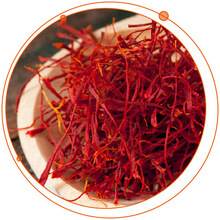
It’s Time to Stop Fraudulent Food Reaching the Consumer with LC-MS/MS
If you are reading this blog, it is likely that you are fully acquainted with food fraud, but let’s just take a moment to set the scene. Food fraud is by no means a new phenomenon and goes as far back as the middle ages, with the concept of tampering or...

Product Quality Assessments of Biotherapeutics Using LC-MS MAM
Why LC-MS MAM?The Liquid Chromatography-Mass Spectrometry Multiple Attribute Methodology (LC-MS MAM) is a technique that is quickly gaining traction in the development and manufacturing of biopharmaceuticals. But what exactly is MAM? As researchers describe in a...

Ion Formation Control Is the Key to Increasing System Robustness
Traditional mass spectrometry ionization methods such as electronic spray ionization (ESI) and matrix-assisted laser desorption ionization (MALDI), are popular methods for detecting the molecular weight of proteins, peptides, and other biologics. The reason being both...

Why You Need Mass Spec for Veterinary Drug Residue and Antibiotic Analysis
As hospitals struggle with increasingly hard-to-treat antimicrobial resistance (ARM) bacterial infections, related deaths now exceed 700,000 per year globally and are predicted to reach 10 million per year by 2050. There’s no denying that these statistics are both...
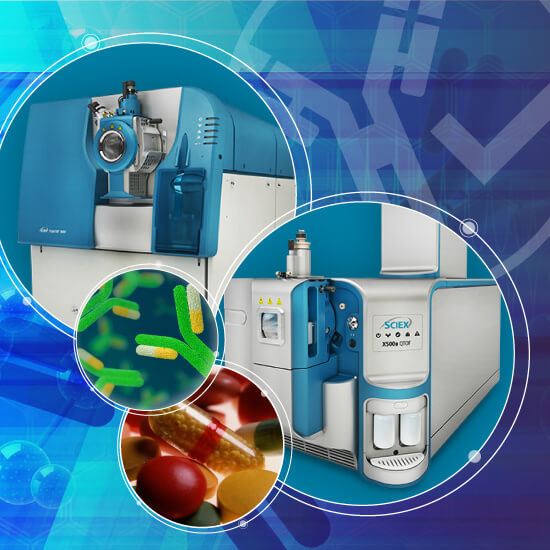
Simplify Your Life with a Streamlined Workflow for Multiple Attribute Methodology (MAM)
The effort to fully characterize and release a biotherapeutic to the market can be onerous. Typically, many tests are required to identify and monitor various attributes of the final product in order to ensure the safety and efficacy of the drug. These product quality...

Solving the Mystery of Forensic Quantitative Analysis
Why You Need Differential Mobility Spectrometry for Forensic Mass Spec Analysis Forensics depend on detection of even the smallest compounds to deliver results you can rely on. You need fast analysis methods that provide highly accurate data across a multitude of...

Calling all Bioanalysts: We’re Making Bioanalytical Selectivity Challenges History
High selectivity is a key component of successful quantitative bioanalysis. As a bioanalyst, we need consistently accurate and robust quantitation of small molecule therapeutics and metabolites. Challenged by complicated matrix interferences, high baseline signal, and...
The Latest and Greatest for Improving Lipidomic Analysis by Mass Spectrometry
Differential Mobility Separation (DMS) resolves multiple lipid classes within complex lipid matrices prior to MS analysis to enable more confident identification of lipid species and more accurate quantitation by MS/MS. Lipidomics research has progressed rapidly in...

Out with the “If it Ain’t Broke, Don’t Fix it” Approach. In with Remote Monitoring.
Often by the time you’re aware of a problem, it’s too late, and disaster has already struck. You’re forced to pick up the pieces—downtime, reduced productivity and lost data. When your PC goes down, IT comes to the rescue. That’s a reactive approach. In many cases, IT...
Increase your Lab’s ROI with Remote Monitoring Service for SCIEX LC-MS Systems
Like most organizations, your lab is likely thinking about ways to reduce costs and maximize profits.If so, keep in mind that no matter your area of research, sample volume or locations, remote monitoring services can make a difference in yearly maintenance...

SWATH Acquisition: A Step Closer to Unravelling the Opioid Puzzle
Drug overdose has become one of the leading causes of death of Americans under 50. If that’s not bad enough, let’s put this into perspective. America makes up only 4% of the world population. In 2015, it recorded 52,400 drug-related deaths, which is about 27% of the...
Greater uptime equals higher productivity
In the old days, if you wanted to monitor your lab’s data, you would either remain by your instrument as long as it took to complete the sample run or dial-in via a telephone modem. Neither option, however, offered much in the way of enhancing productivity. Today’s...

Simplifying Polar Pesticides Within a Single Analysis
Glyphosate is a polar pesticide widely used as a garden herbicide. It is an ingredient in the world’s bestselling weed killer, which farmers consider one of their best solutions to their super weed problems. However, the chemical has become one of the most...
5 Applications That Benefit from a New Dimension in Selectivity
Mass spectrometry can provide exceptional sensitivity, selectivity, resolution, throughput, and mass accuracy, but certain applications demand additional levels of selectivity. This is where differential ion mobility technology comes in. It delivers highly-selective,...